




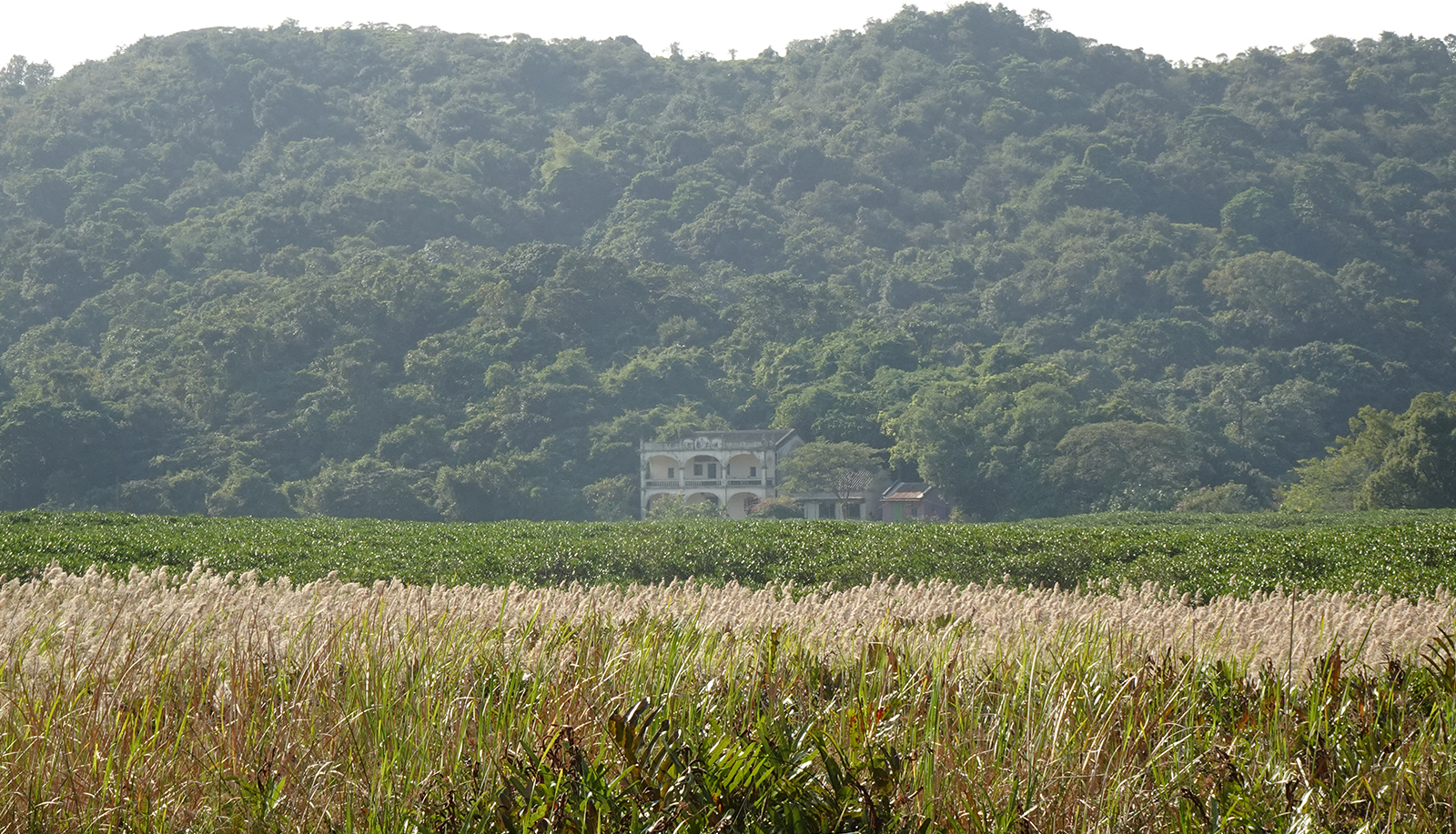
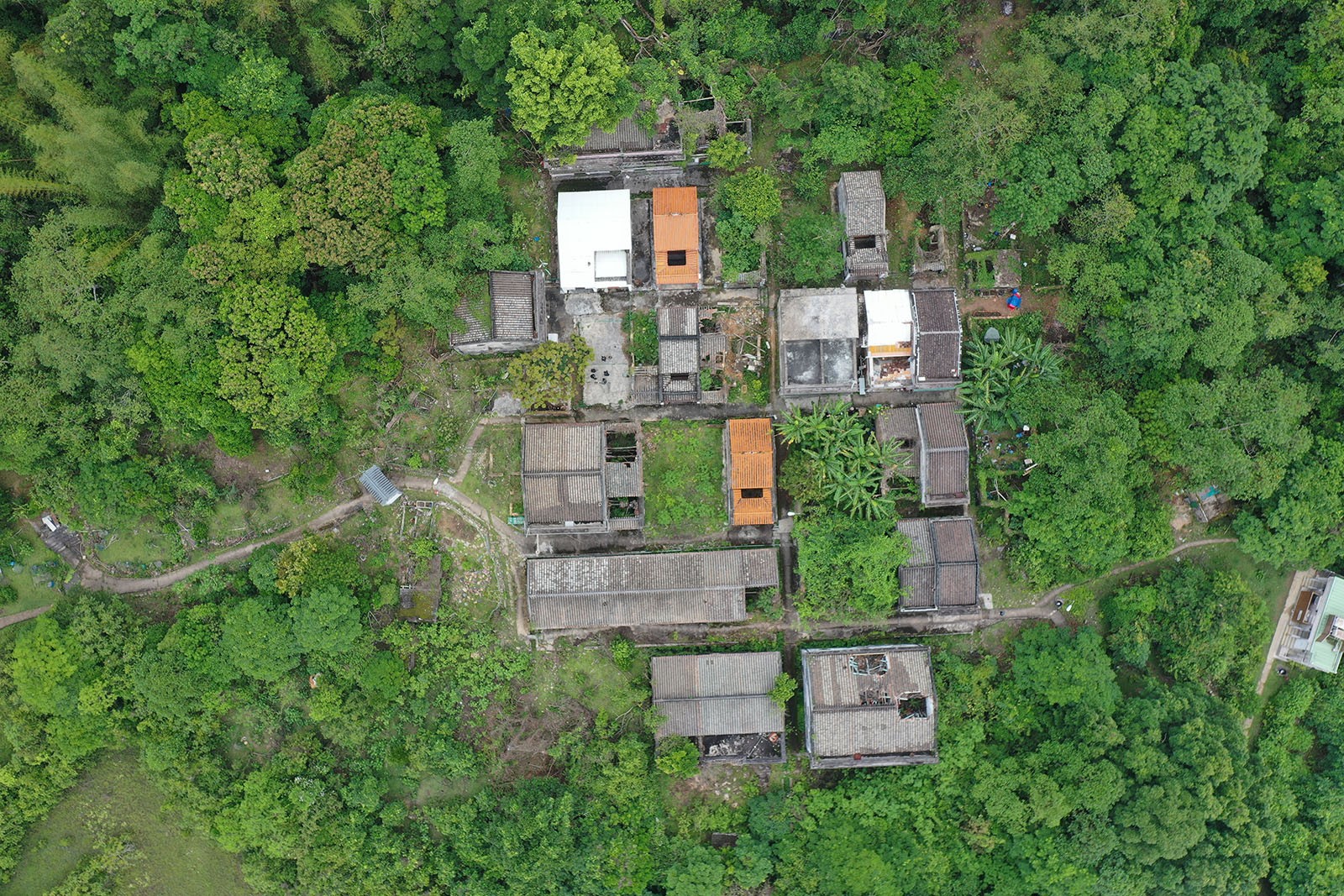
Lo Wai is the oldest Hakka settlement in Kuk Po. The village features seven rows of houses backed by a fung shui woodland, with east and west entrances and a central north-south axis road. The layout reflects the spatial wisdom of traditional Hakka villages. The arrangement of 'mountains, forest, houses, ponds, and fields' illustrates the Hakka philosophy of living in harmony with nature.
5 Lo Wai
Signage Content
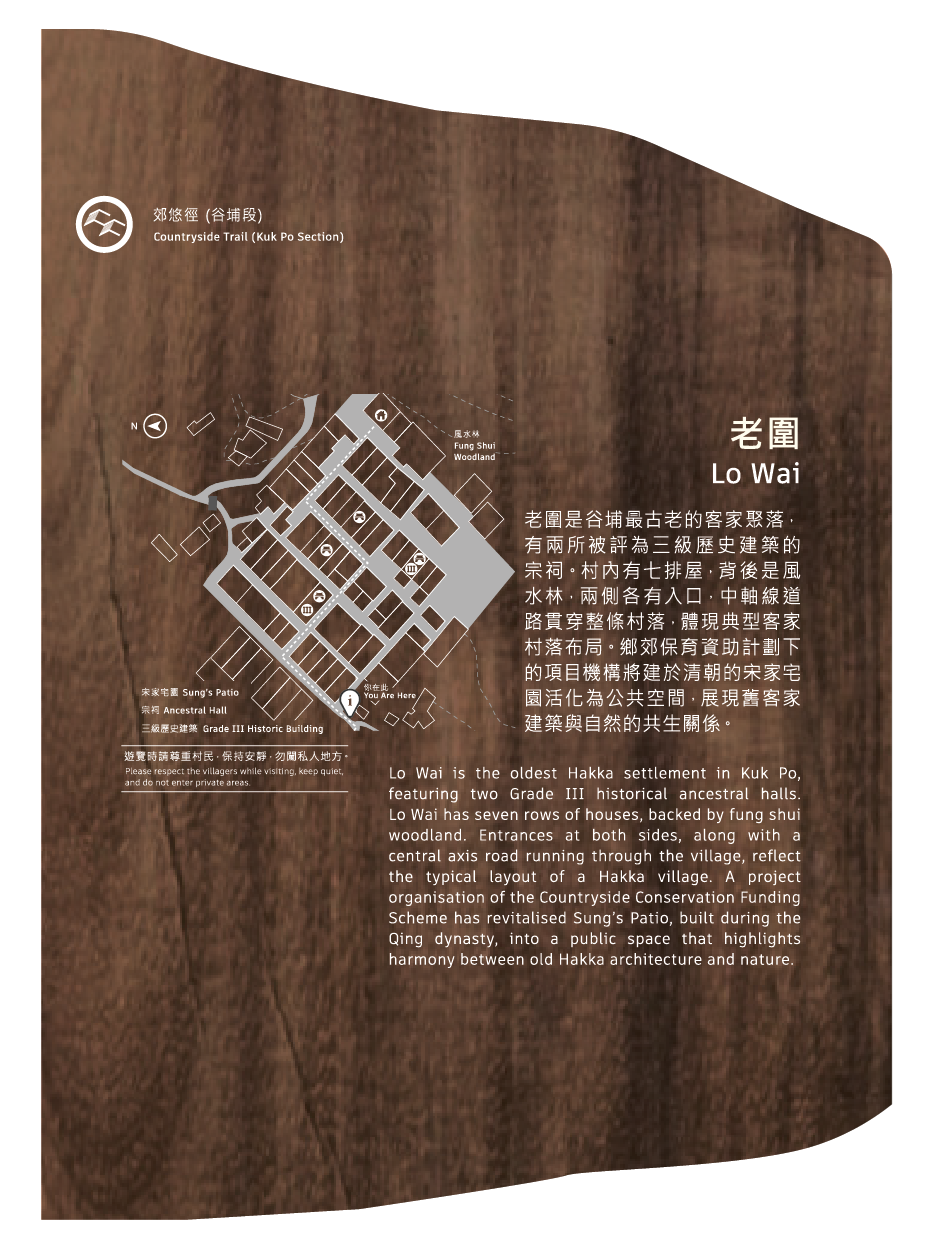
Lo Wai is the oldest Hakka settlement in Kuk Po, featuring two Grade III historical ancestral halls. Lo Wai has seven rows of houses, backed by fung shui woodland. Entrances at both sides, along with a central axis road running through the village, reflect the typical layout of a Hakka village. A project organisation of the Countryside Conservation Funding Scheme has revitalised Sung's Patio, built during the Qing dynasty, into a public space that highlights harmony between old Hakka architecture and nature.
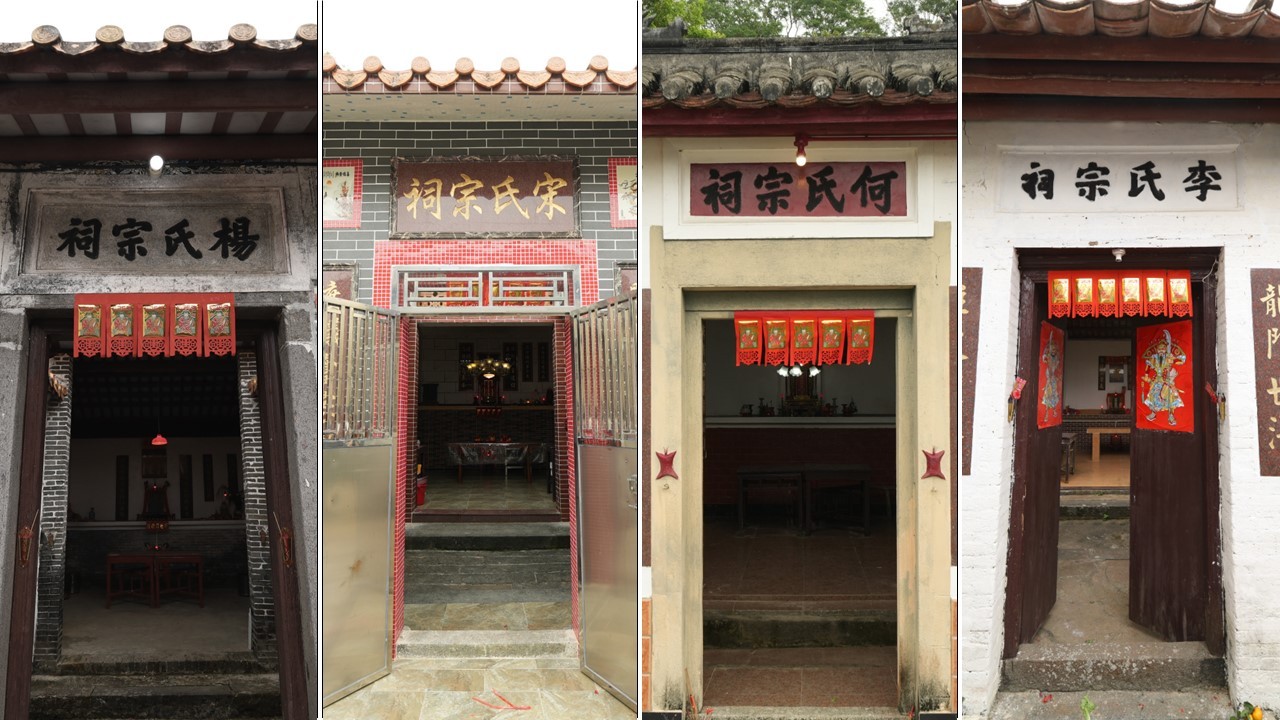
In traditional Hakka villages, 'every clan has its ancestral hall'. These halls are not only symbols of family lineage but also spaces for preserving clan bonds and cultural heritage. Lo Wai still retains ancestral halls for the Yeung, Sung, Ho, and Lee clans, with the Yeung and Lee halls recognised as Grade III historic buildings for their cultural and architectural value.
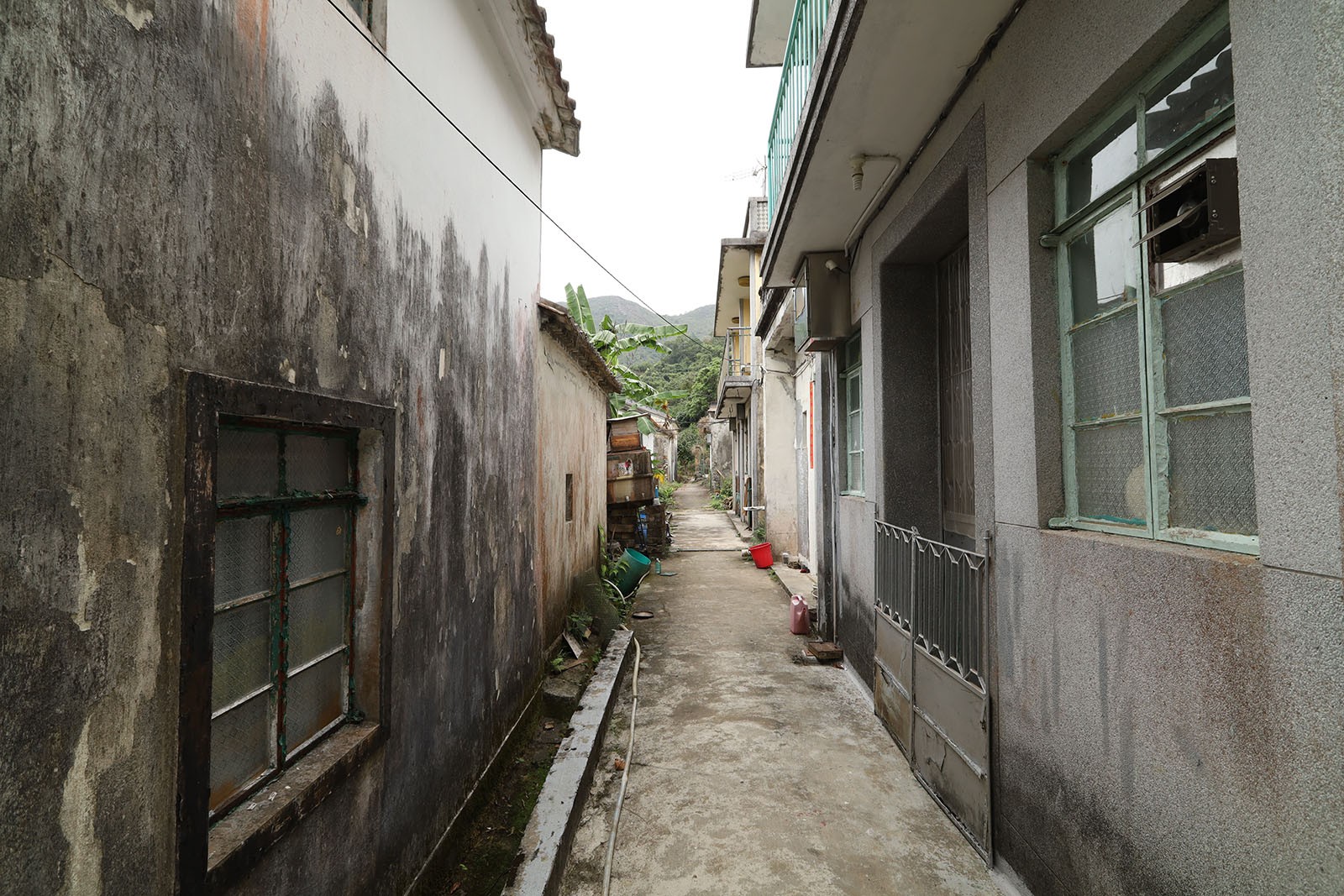
In Lo Wai, village house materials reflect changing construction techniques across generations. Early homes were built with stone and earth, showing traditional craftsmanship. Later additions of lime, grey bricks, and red bricks marked improvements in building and living standards. Window sizes and glass patterns reveal changing aesthetics and lifestyles. These structures are living records of the village's history and cultural evolution.
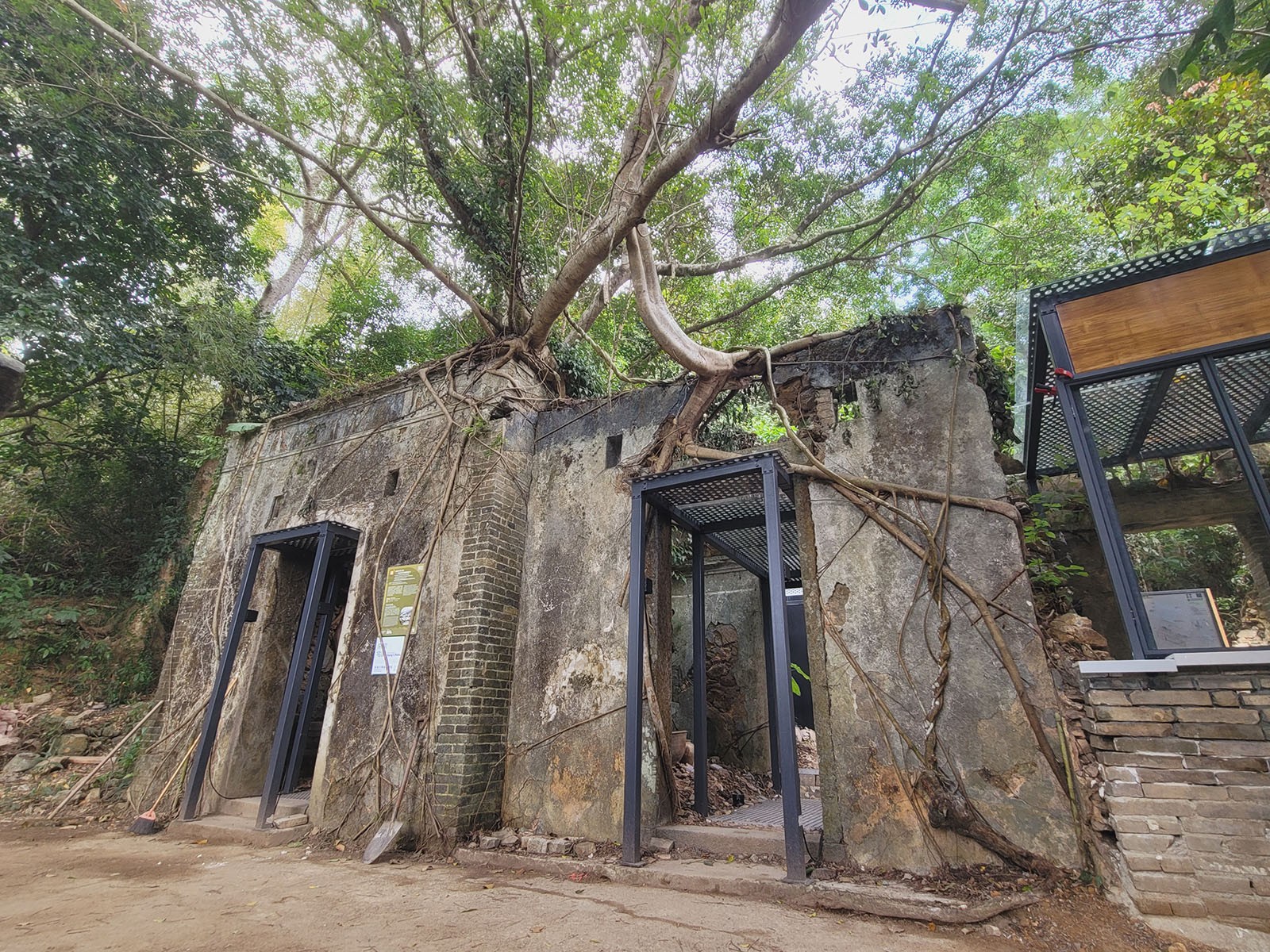
A project team of the Countryside Conservation Funding Scheme restored a ruin in Lo Wai, transforming it into a patio for public access. The site showcases the spatial evolution of village houses in Kuk Po over the past century, while revealing the textures of building walls and their interaction with natural forces - tree roots, wind, and rain. In the courtyard, towering trees and tangled roots and vines create a vivid interplay, with dappled sunlight filtering through the canopy. The design thoughtfully blends the shifting light on stone walls with undulating earthen mounds, offering visitors a garden-like experience of corridors, terraces, and pavilions.
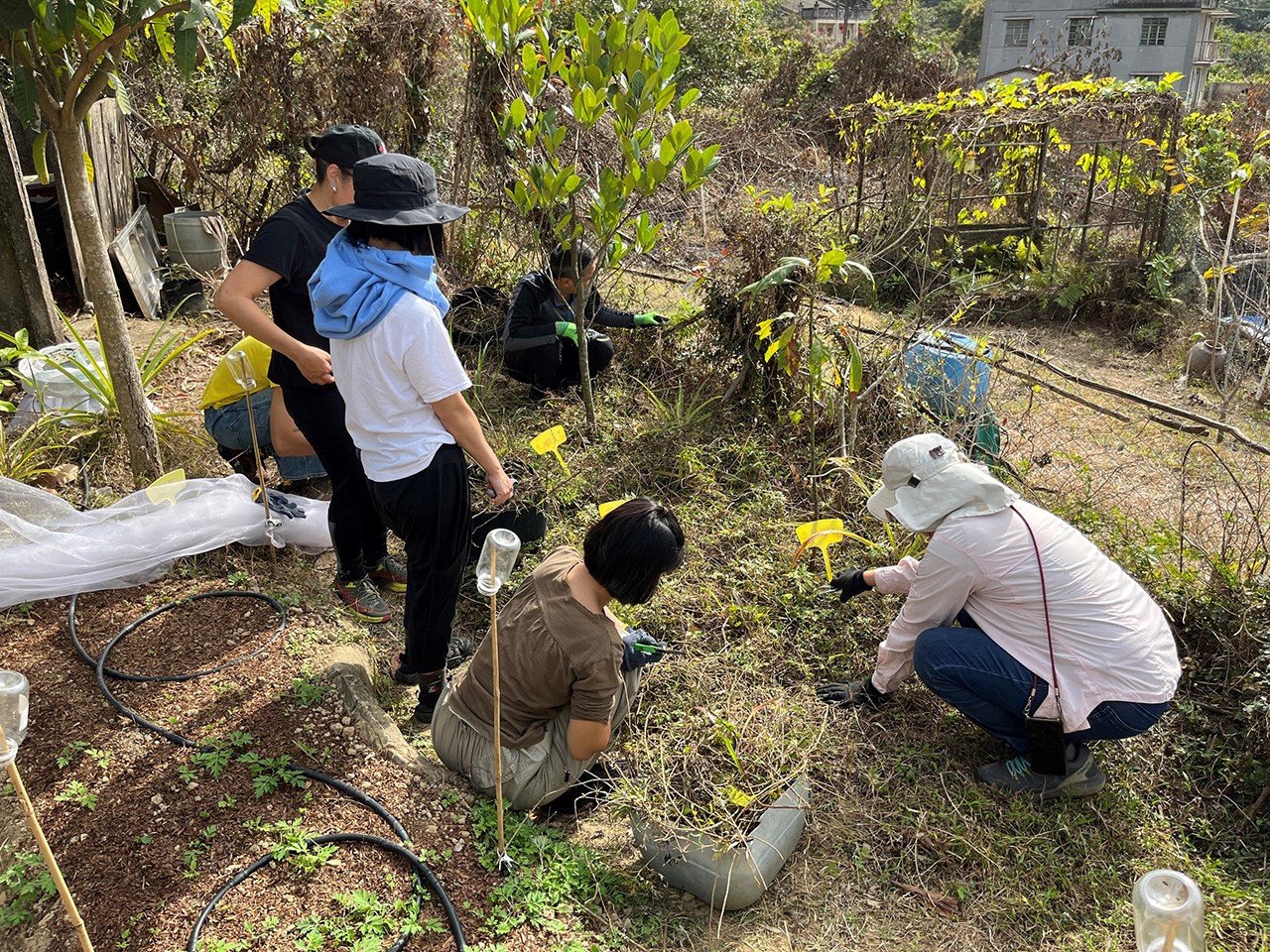
In recent years, some villagers have returned to Kuk Po for long-term residence, embracing a self-sufficient farming lifestyle. Living in tune with the nature, they cultivate crops and participate in village affairs. For them, Kuk Po is not just their nurturing grounds but also their spiritual home. Though simple, village life offers peace from the city and a deep connection to land and community - a true sense of happiness.
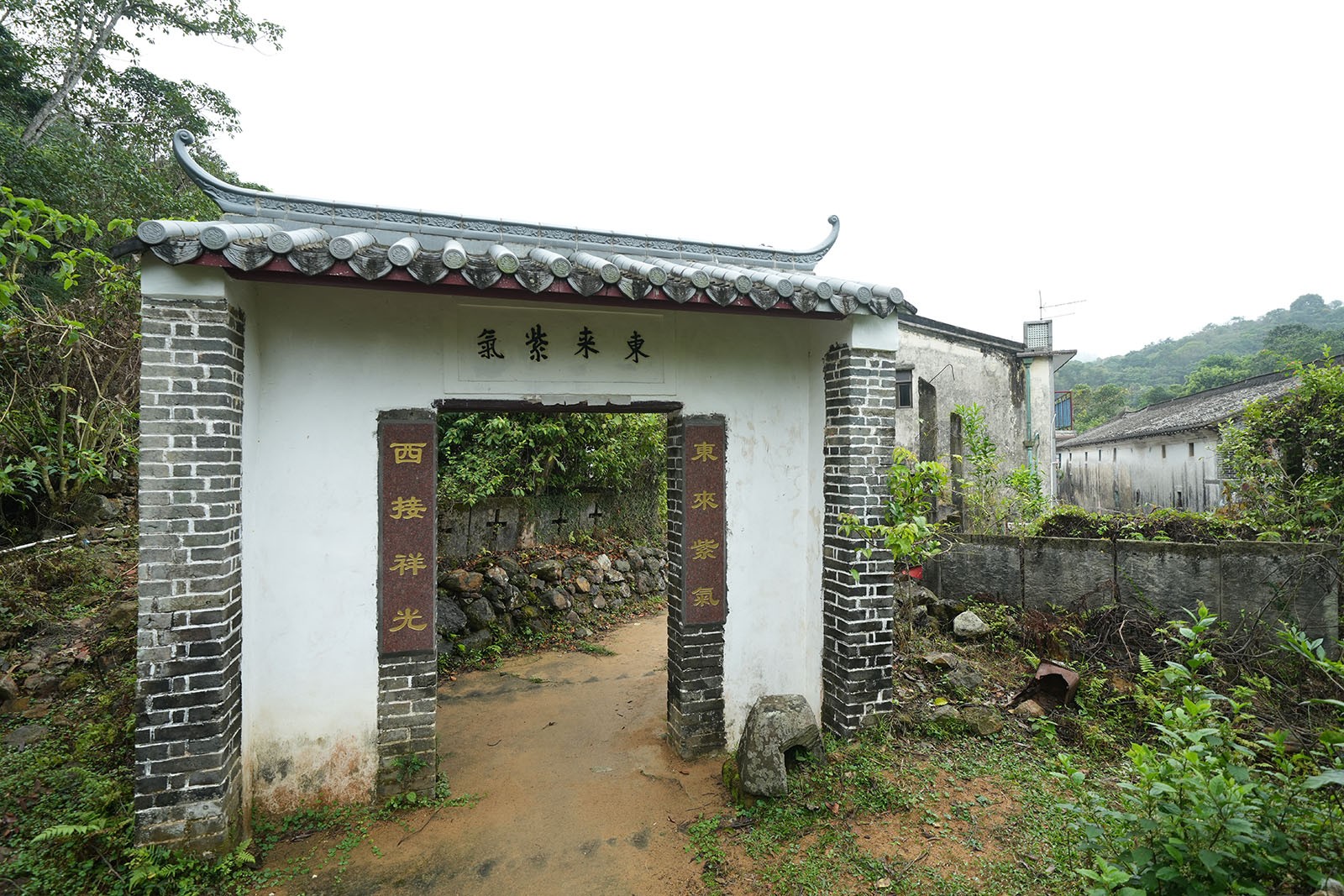
In Lo Wai, the East Gate and West Gate mark entrances and boundaries. The East Gate bears the inscription 'Auspicious Energy from the East', symbolising good fortune and lasting blessings. The West Gate hosts a shrine to Tai Wong Yeh (Great Lord), the village guardian deity. Villagers pray here for favourable weather and community well-being. A large banyan behind the shrine serves as a natural shield, reflecting villagers' deep respect for nature and ancestral traditions.
Home