




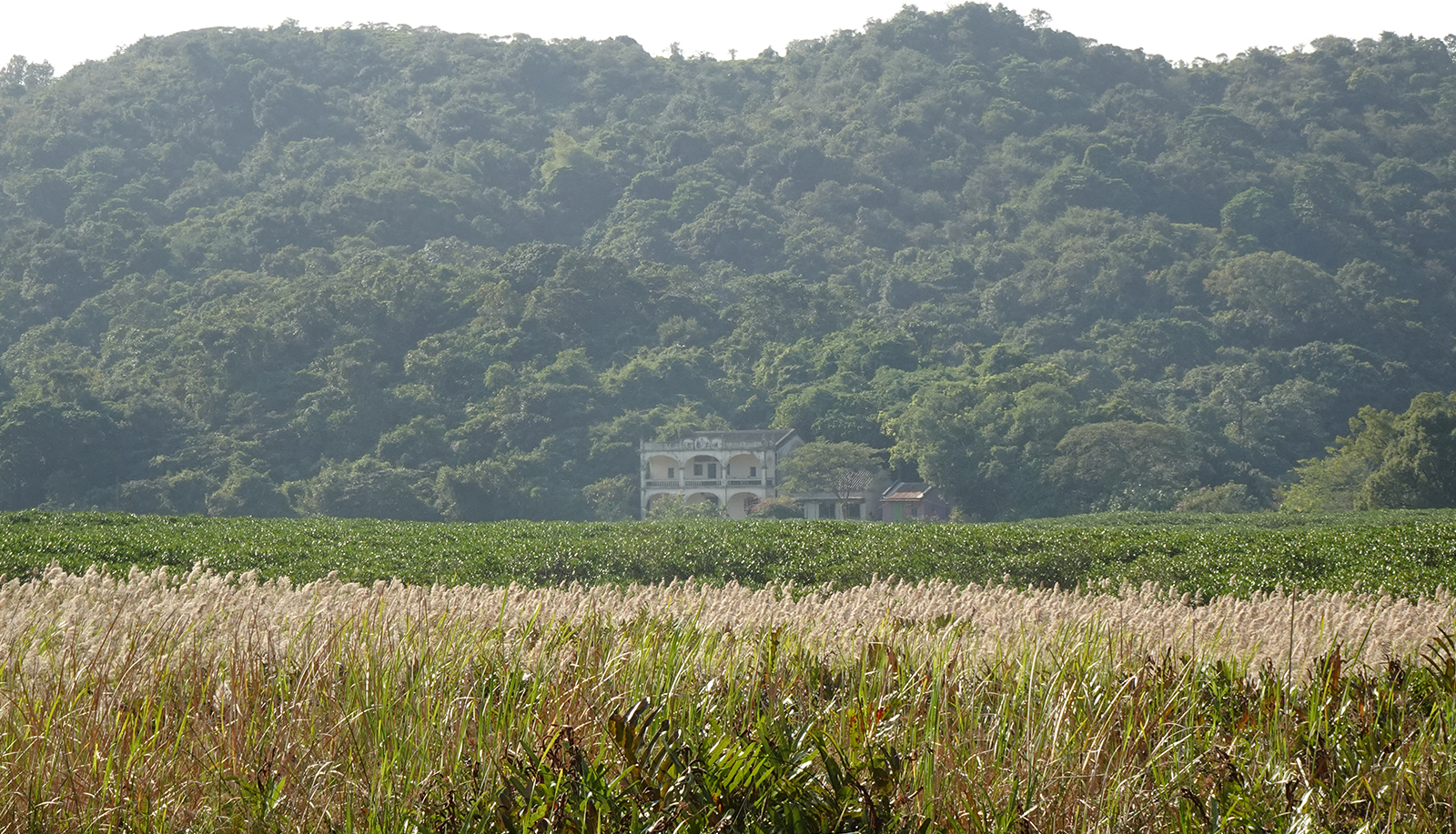
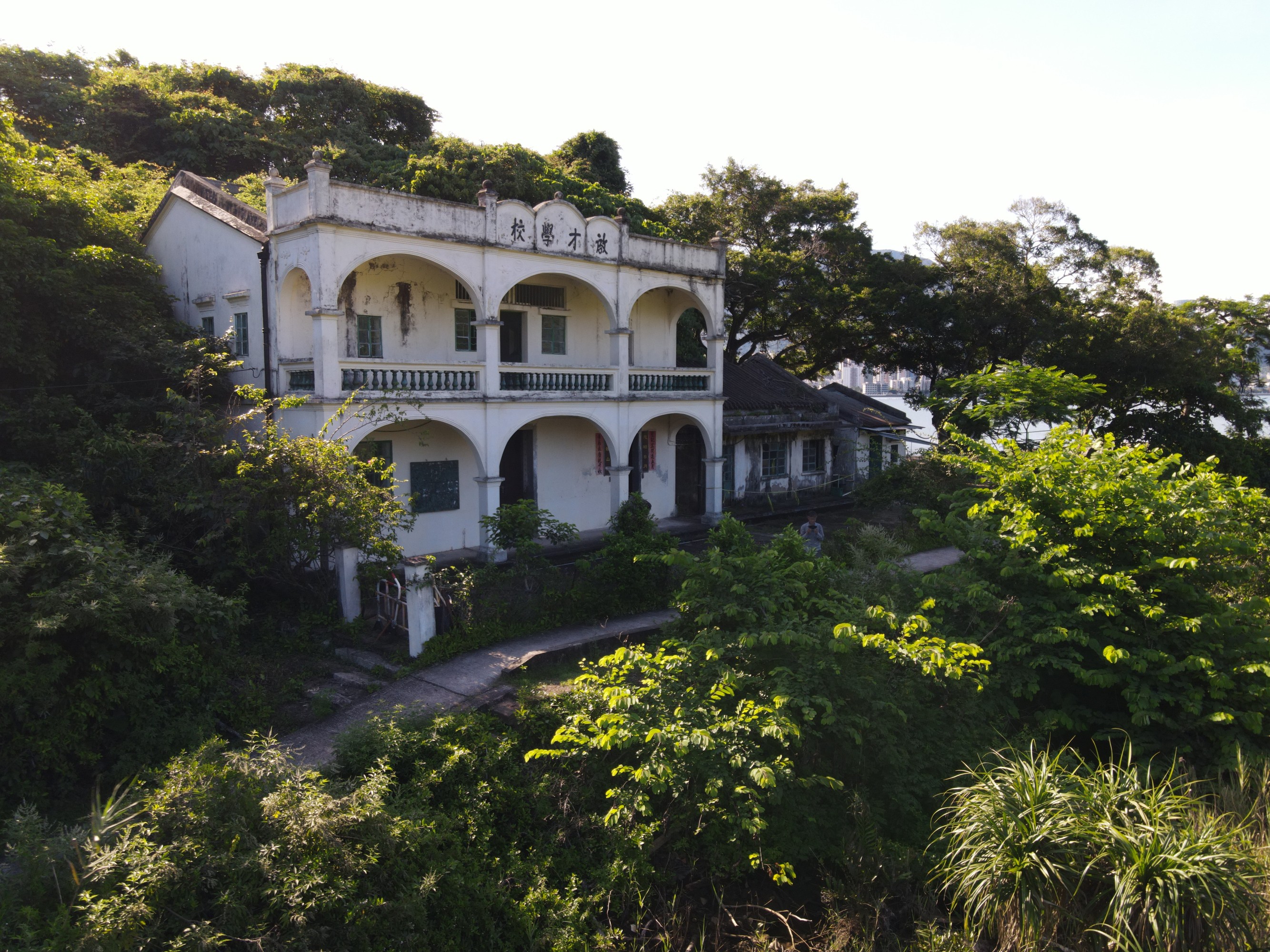
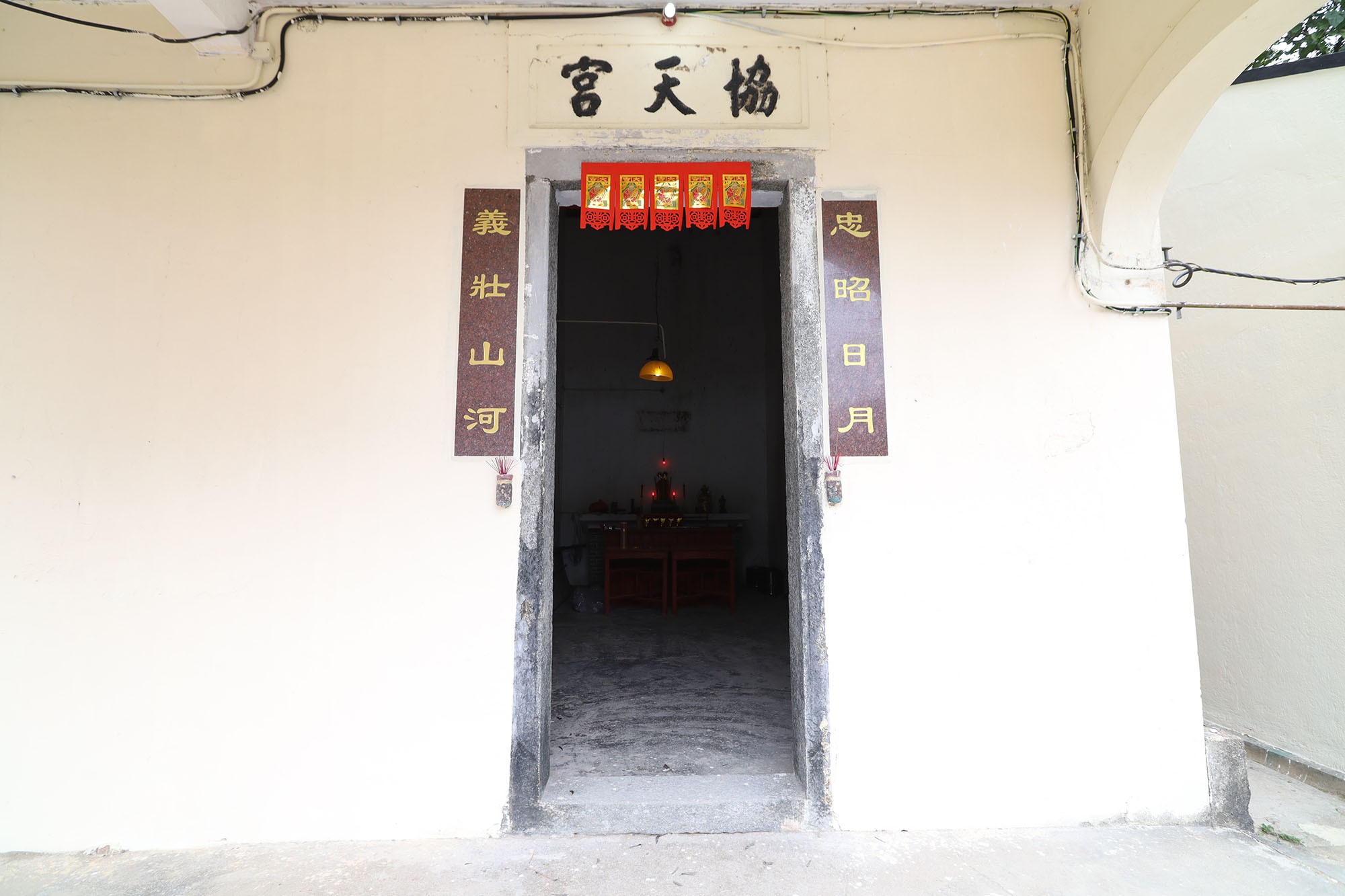
Kai Choi School blends Chinese and Western architectural styles. Its founding principal, Sung Ching, drew inspiration from the main building of Whampoa Military Academy in Guangzhou. Built with grey bricks and stone, reinforced by cement, and topped with timber beams and tiled roofs, the school balances strength and beauty. The three-bay structure features an arched veranda, terrace, and classrooms. The right wing of the lower level housed Hip Tin Temple dedicated to Kwan Tai (God of War), while gun holes on the upper level reveal a time of vigilance. In 1964, a single-storey annex block was added beside the main building, to cope with the growing number of students.
2 Kai Choi School
Signage Content
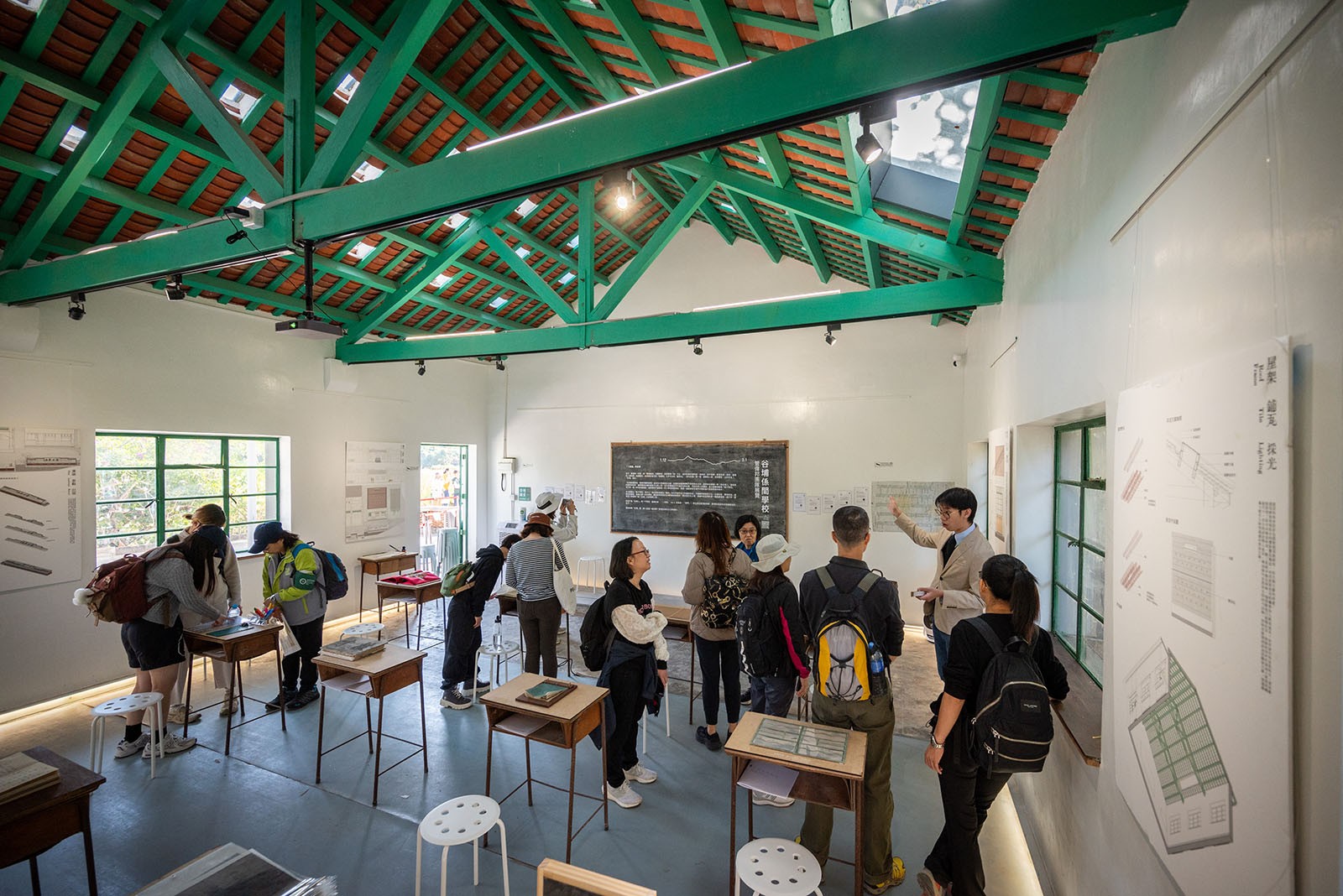
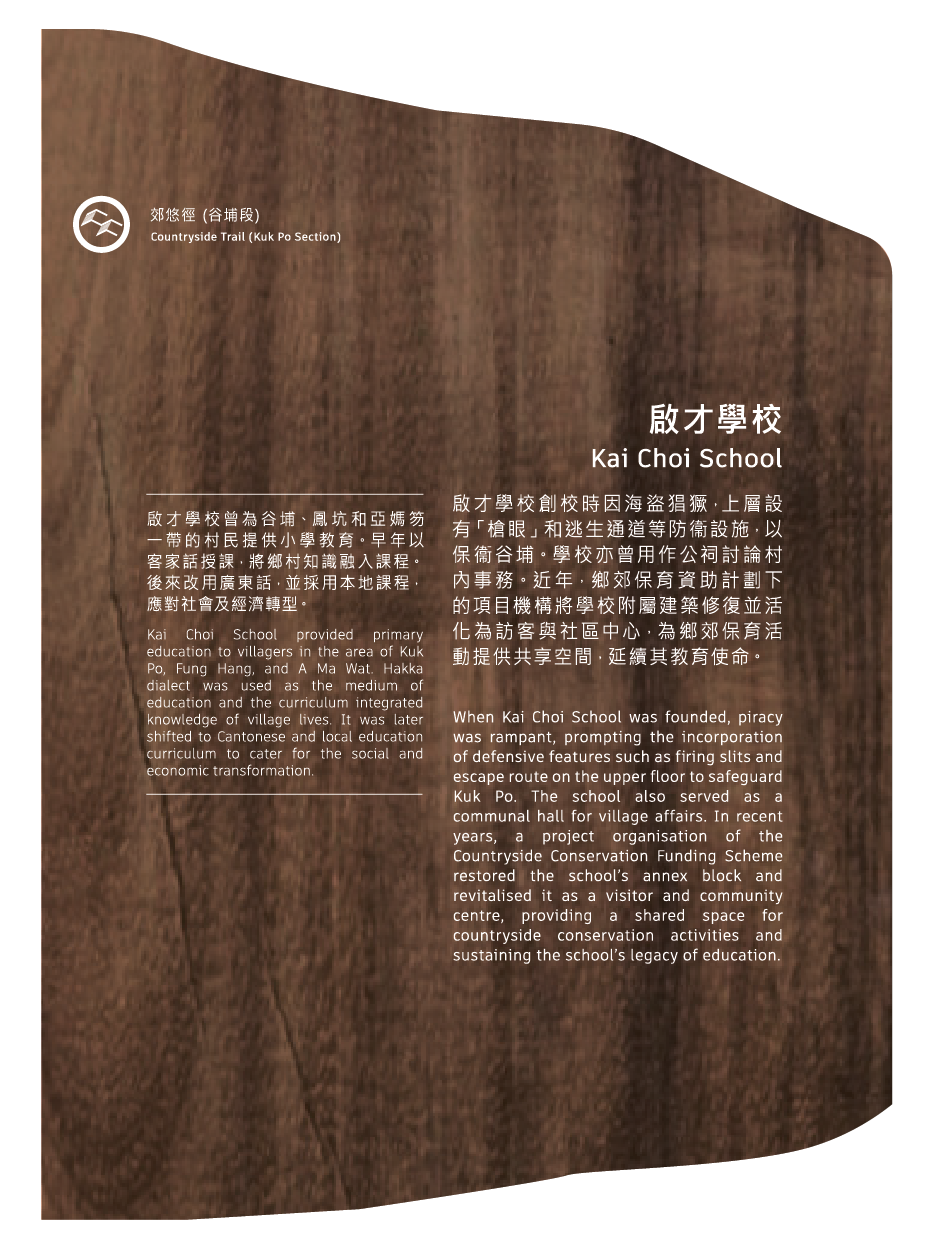
When Kai Choi School was founded, piracy was rampant, prompting the incorporation of defensive features such as firing slits and escape route on the upper floor to safeguard Kuk Po. The school also served as a communal hall for village affairs. In recent years, a project organisation of the Countryside Conservation Funding Scheme restored the school's annex block and revitalised it as a visitor and community centre, providing a shared space for countryside conservation activities and sustaining the school's legacy of education.
Kai Choi School provided primary education to villagers in the area of Kuk Po, Fung Hang, and A Ma Wat. Hakka dialect was used as the medium of education and the curriculum integrated knowledge of village lives. It was later shifted to Cantonese and local education curriculum to cater for the social and economic transformation.
Kuk Po is home to several cultural assets recognised as Grade III historic buildings in Hong Kong, reflecting its strong traditions in clan heritage and education. Among them, Kai Choi School and Hip Tin Temple stand out for their unique 'school and temple as one' design - where villagers once learned and worshipped Kwan Tai (God of War) in the same place. This rare spatial fusion reveals the deep harmony between learning and faith, embodying the Hakka belief in nurturing both knowledge and virtue.
Built in 1932, Kai Choi School served Kuk Po and nearby villages until its closure in 1993. In 2024, with the support from the Countryside Conservation Funding Scheme, the annex block of Kai Choi School together with its forecourt, has been revitalised as Kuk Po Common, transforming the area into a public community venue - a great place for village gatherings, cultural exchange, and local events.
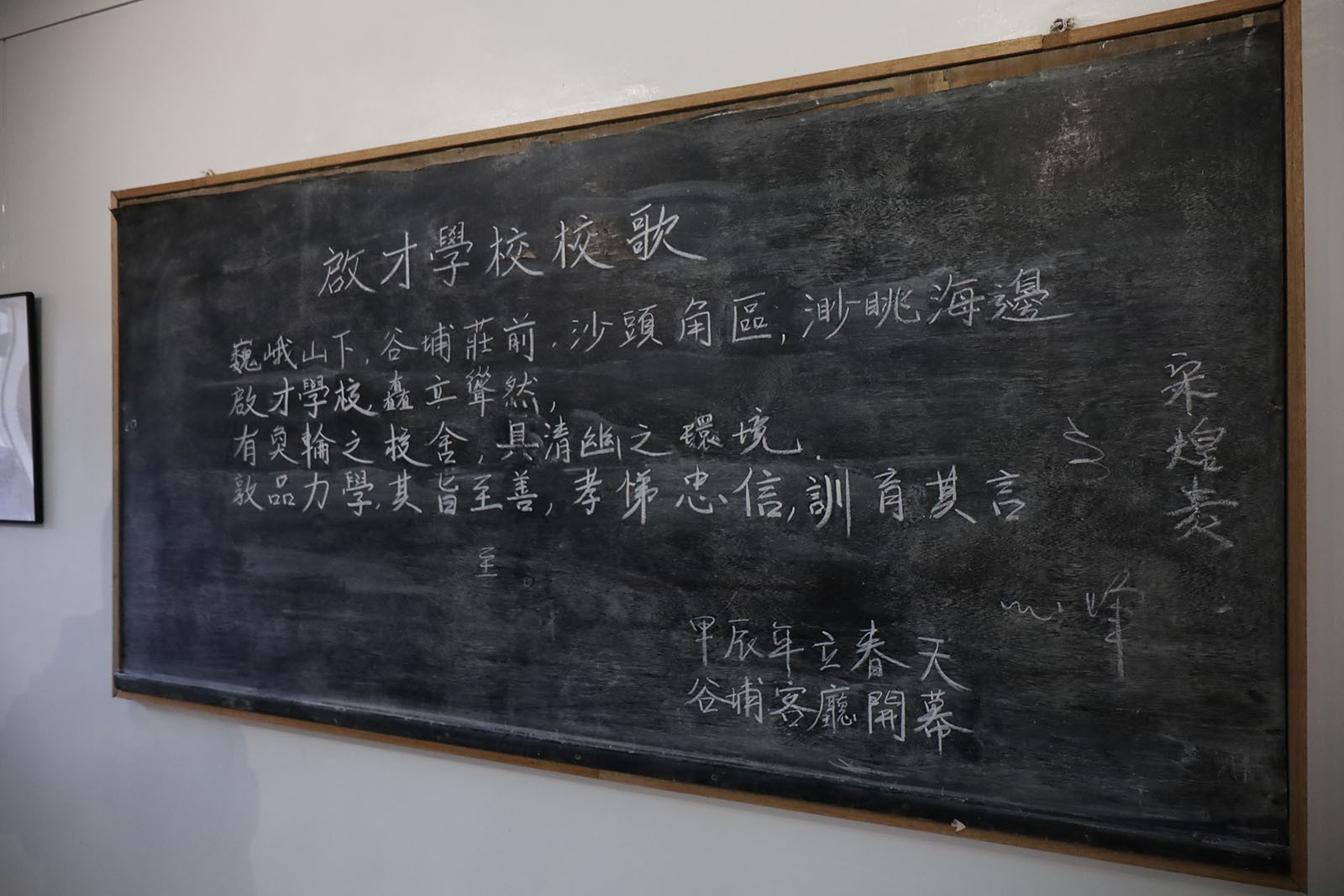
The school song captures generations of memories. Built with local and overseas villagers' contributions, Kai Choi School initially taught in Hakka dialect, blending agricultural and life knowledge before transforming to the modern curriculum. For alumni, the school was the shared childhood memories. A project supported by the Countryside Conservation Funding Scheme invited former students to reunite at the school, letting the school song echo through the Kuk Po valley once again.
Home