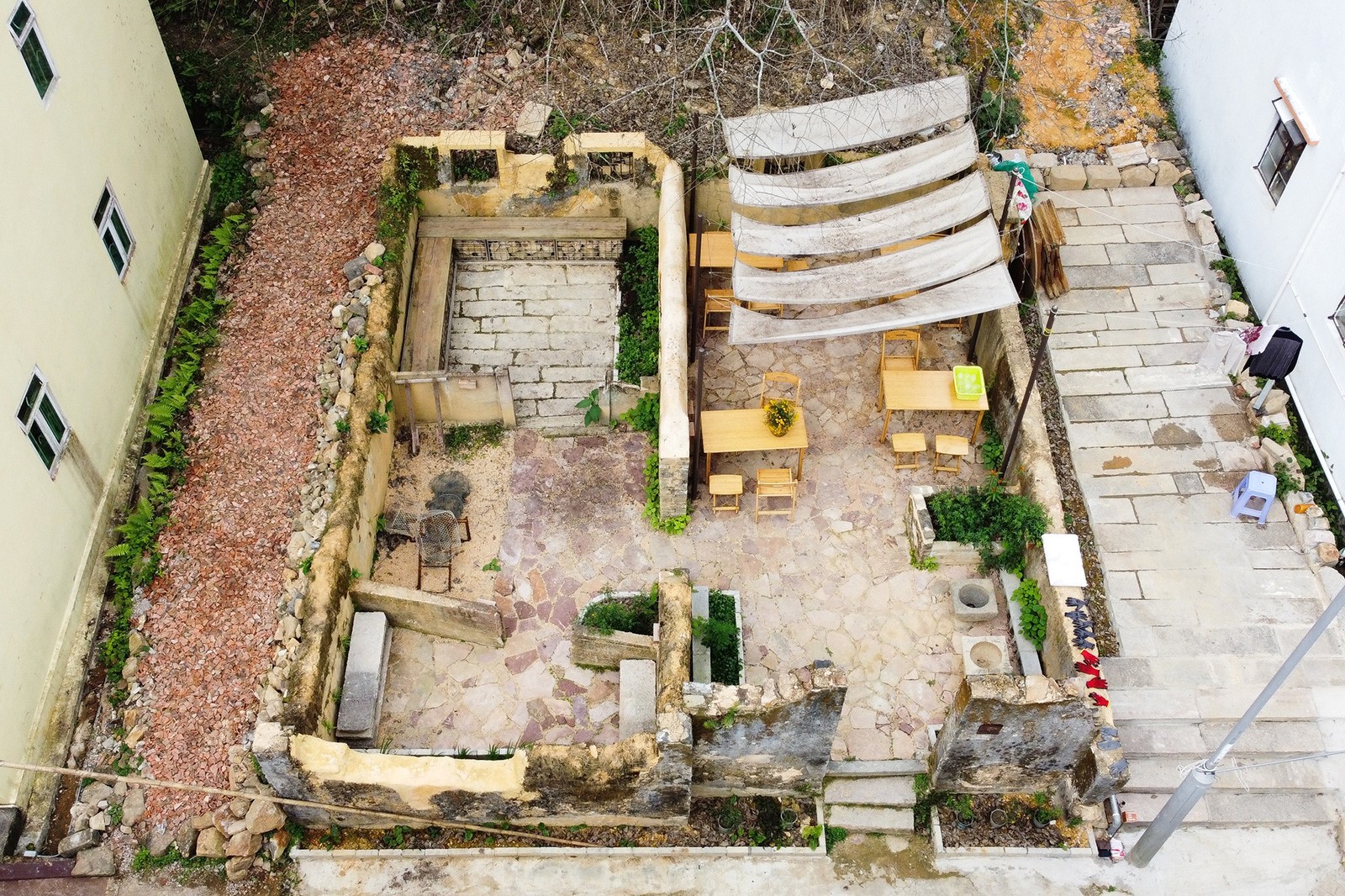





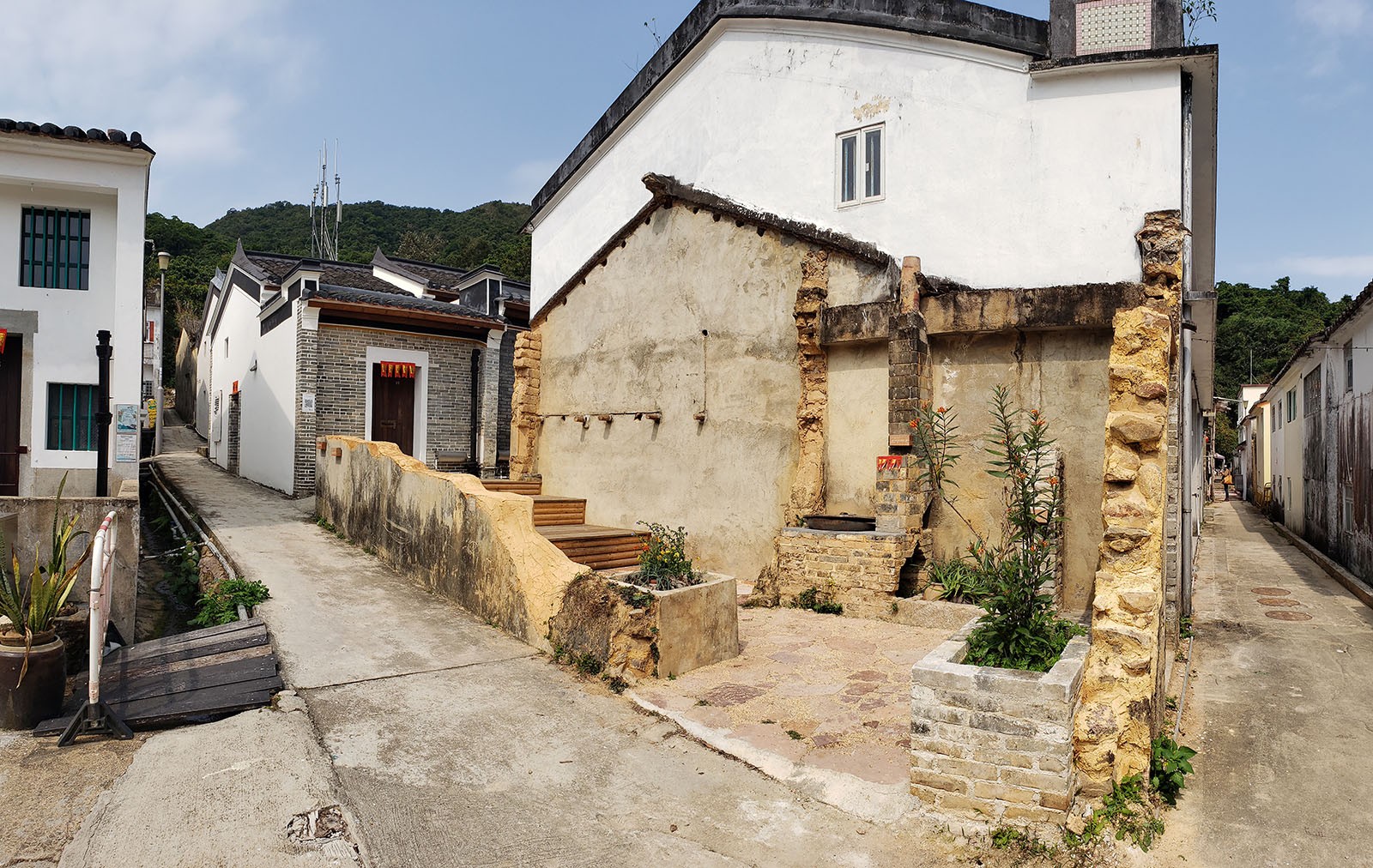
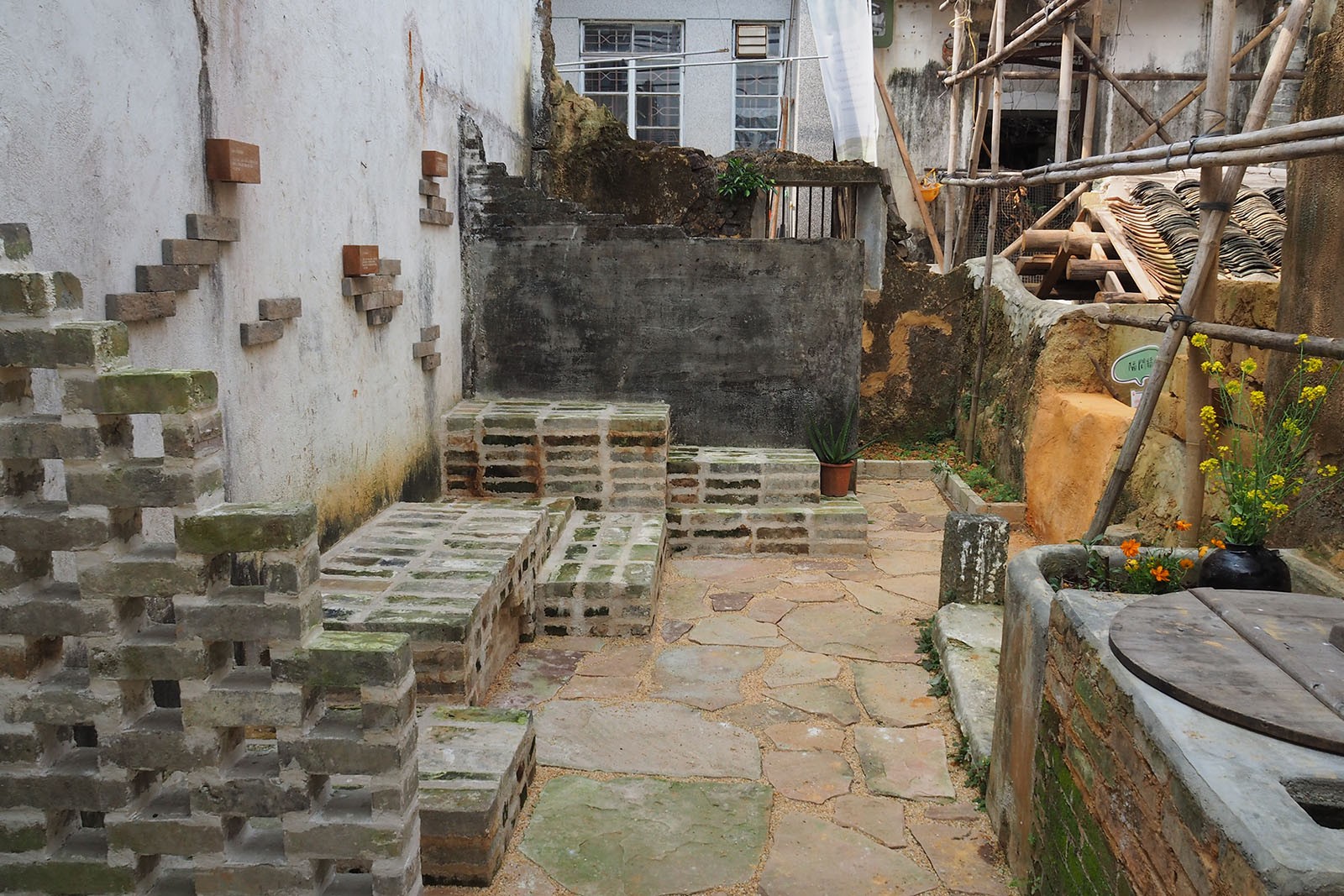
The 'Stove' Garden was revitalised from a semi-collapsed Hakka old house. Its intact fir wood beams were polished and repurposed into terraced platforms, while the original rammed earth walls, stove and water vats were preserved. The restored stove remains functional, now serving as a warm gathering space for villagers and a hub for cultural exchange.
6 Lai Chi Wo Village Gardens
Signage Content
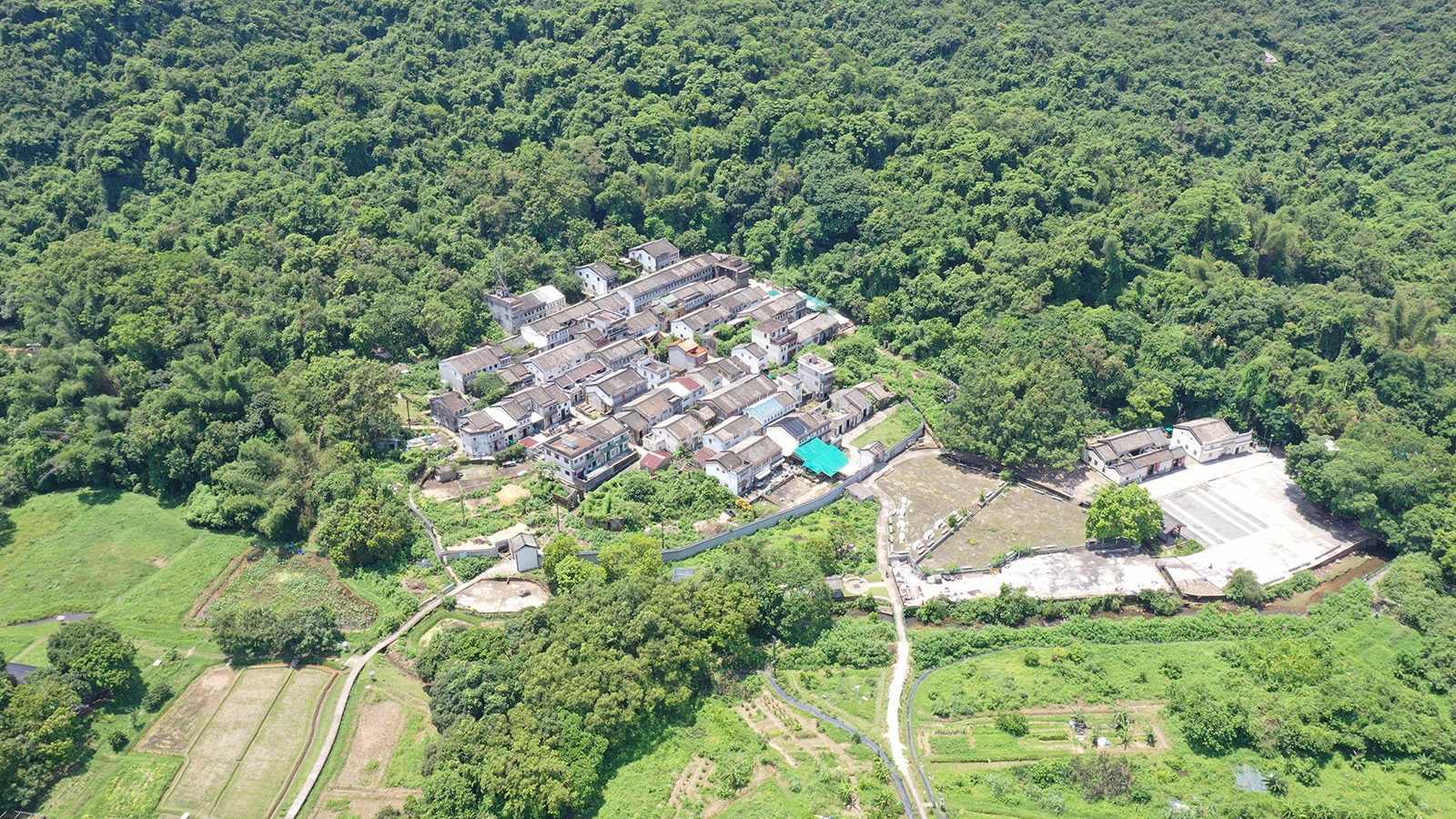
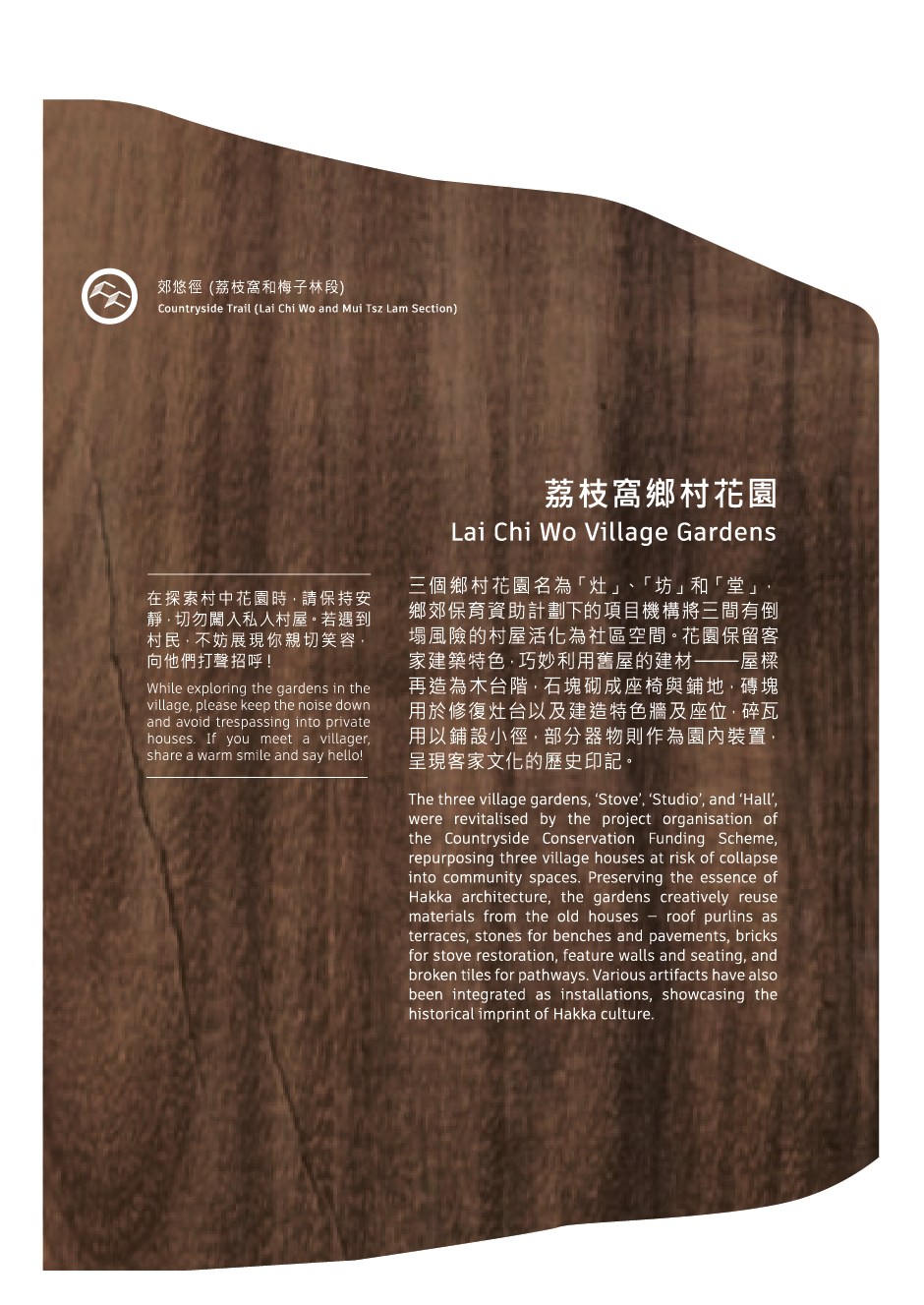
The three village gardens, 'Stove', 'Studio', and 'Hall', were revitalised by the project organisation of the Countryside Conservation Funding Scheme, repurposing three village houses at risk of collapse into community spaces. Preserving the essence of Hakka architecture, the gardens creatively reuse materials from the old houses - roof purlins as terraces, stones for benches and pavements, bricks for stove restoration, feature walls and seating, and broken tiles for pathways. Various artefacts have also been integrated as installations, showcasing the historical imprint of Hakka culture.
The 'Studio' Garden features a clever interplay of old and new brick walls. Its entrance wall is designed with varying heights, creating a dynamic structure, while preserving elements like the traditional stove, water vats, and the base of a treadle-operated pestle. The walls are adorned with villagers' oral histories, allowing visitors to immerse themselves in the rich cultural heritage of the Hakka rural life.
The 'Hall' Garden preserves the original architectural layout while repurposing historical artefacts - such as millstones, fishing nets, and iron window frames - into display pieces through artistic installation. 'Rooms' paved with stone slabs and gabion benches, along with pathways made of old tiles, create a poetic atmosphere where history and nature harmoniously coexist.
Home