




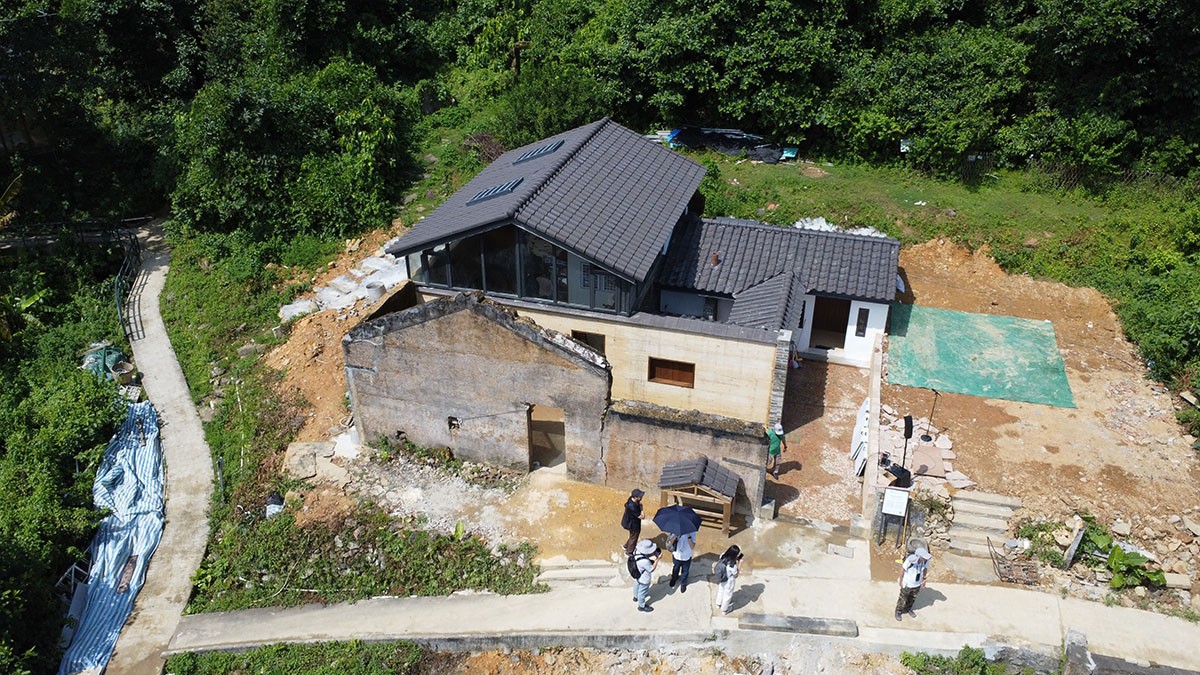
The restoration project combines traditional rammed earth technique with modern materials, utilising local soil from the village to reconstruct exterior walls and recycling bricks from collapsed houses to recreate the authentic appearance of Hakka dwellings. The new design incorporates carbon-reduction features like photovoltaic system and rainwater harvesting, showcasing sustainable building ideas.
10 Mui Tsz Lam Commons
Signage Content
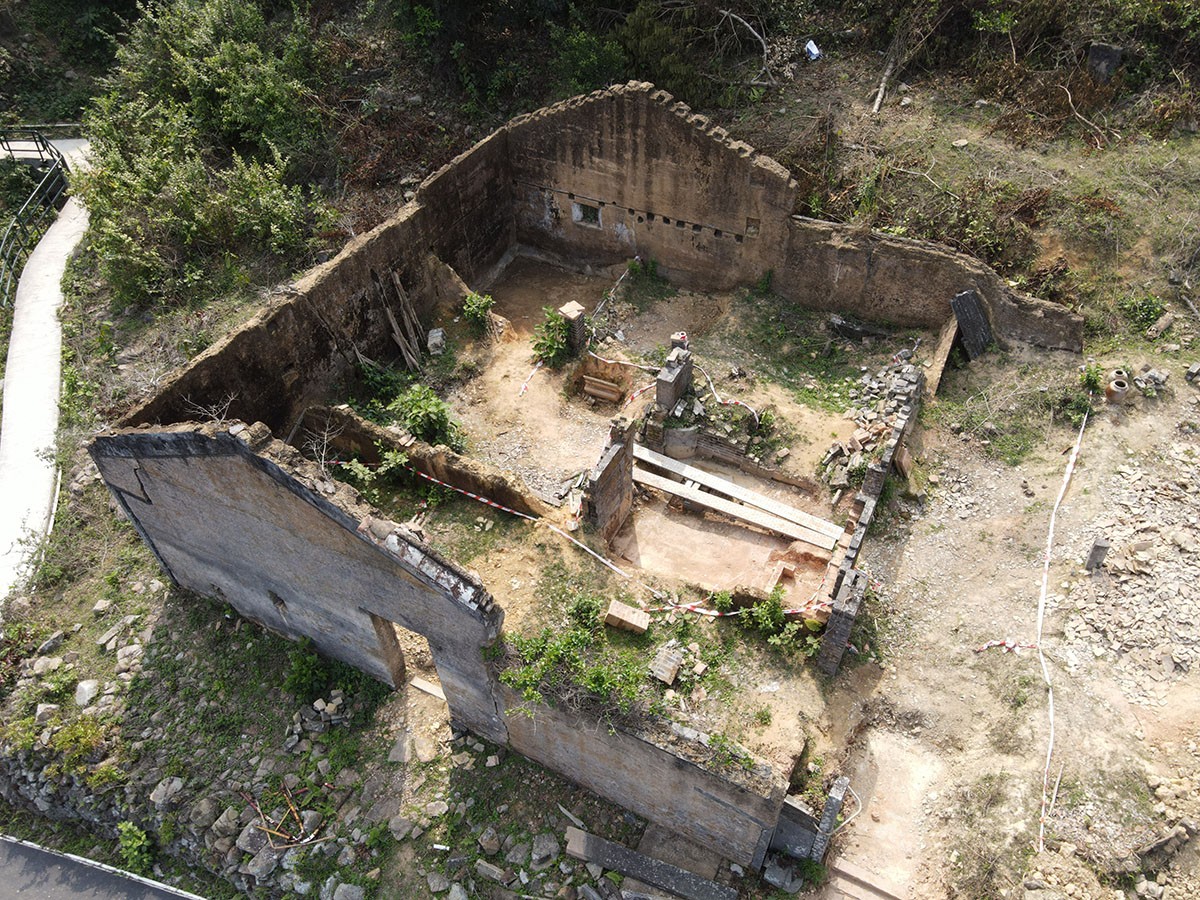
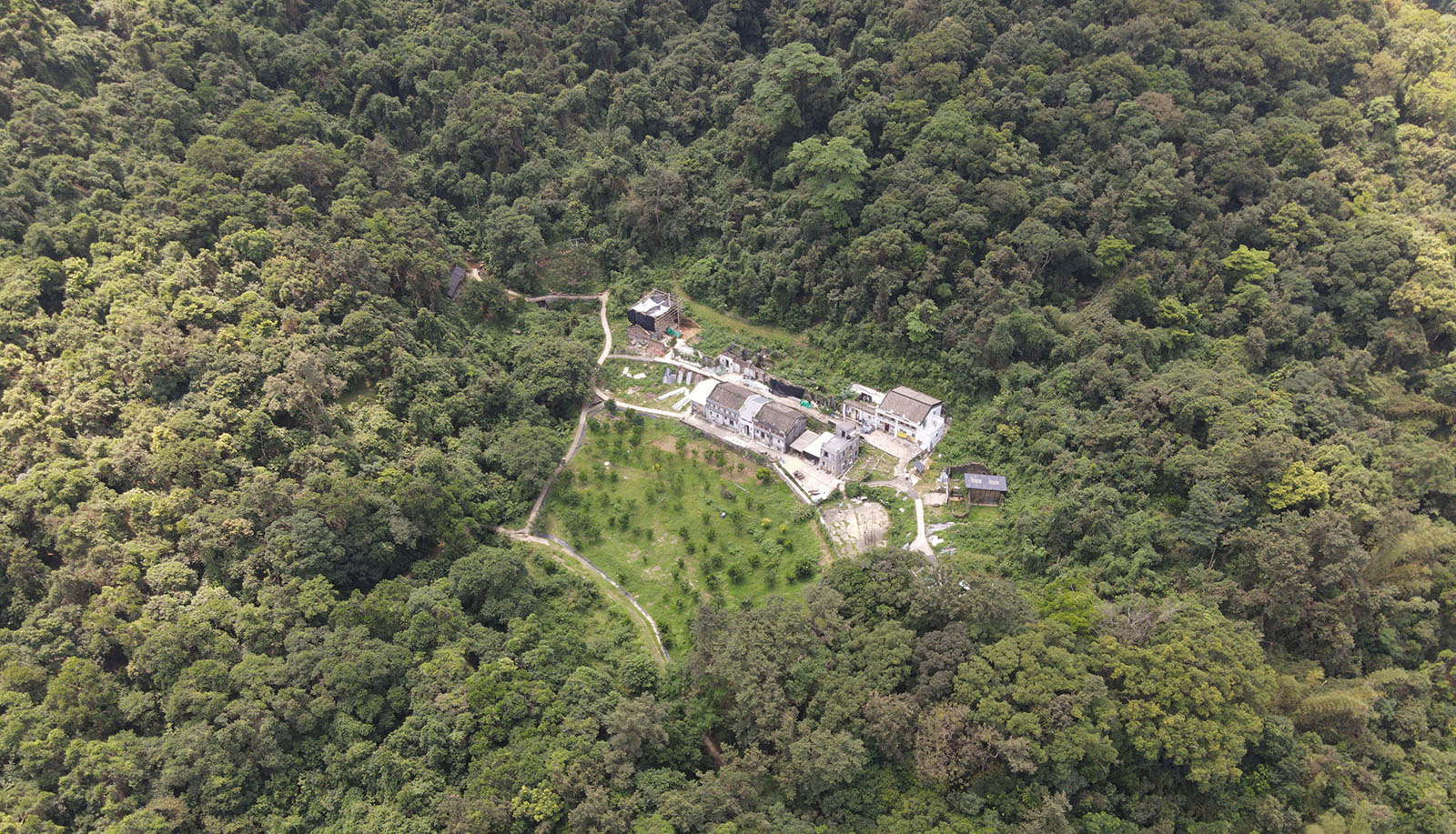
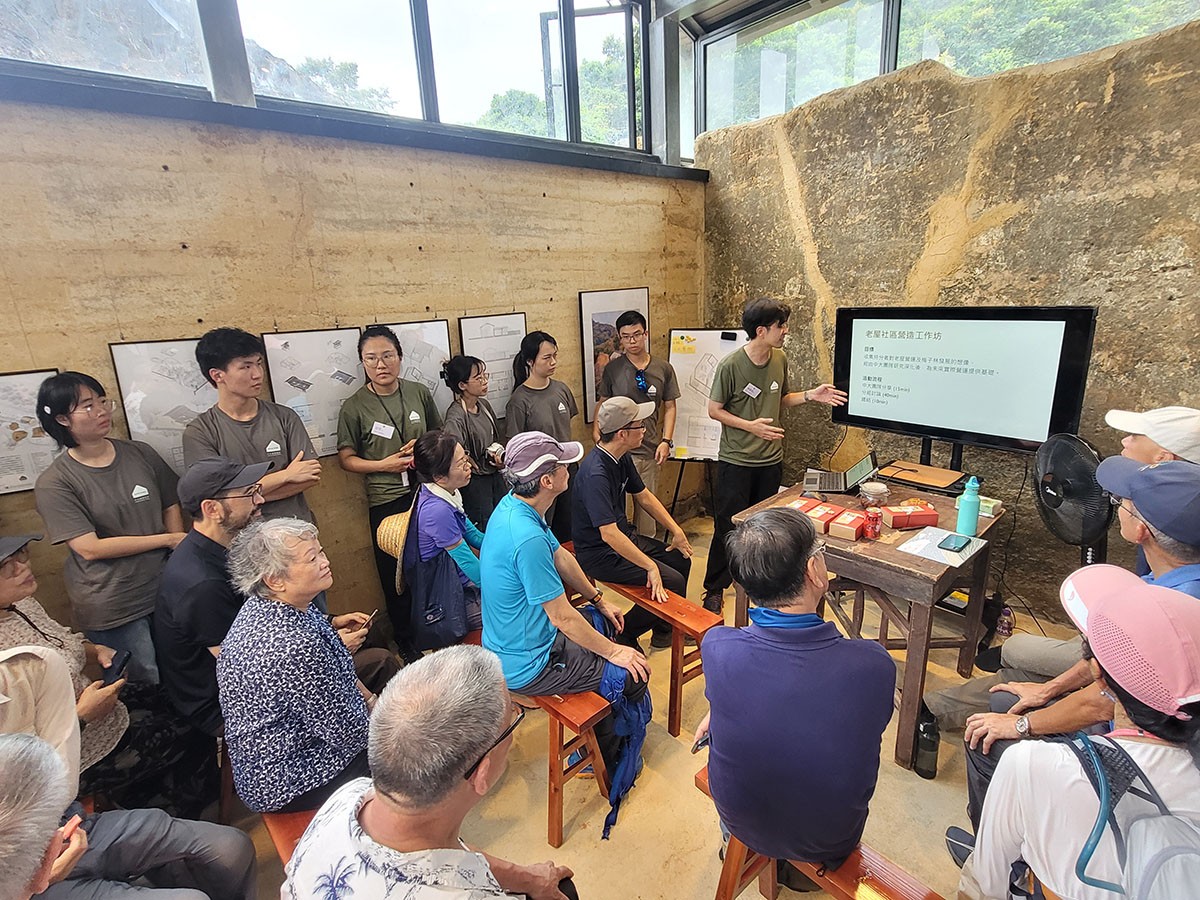
'Mui Tsz Lam Commons' is the oldest village house in Mui Tsz Lam. Its roof and interior partitions have collapsed over time, but the rammed earth perimeter wall still stands. A project organisation of the Countryside Conservation Funding Scheme designed a new structure to preserve the old wall, revitalising this cultural heritage as a shared activity space for public and villagers.
'Mui Tsz Lam Commons' was named 'The Old House' originally. With the concept of 'the hand that gives, gathers', it encourages villagers to support countryside conservation and unites like-minded individuals to participate in revitalisation of Mui Tsz Lam.
Following its restoration, the Mui Tsz Lam Commons has been transformed into the 'Village Community Hub'. It now serves not only as a showcase for Hakka cultural heritage but also as a base for supporting the conservation and revitalisation of Mui Tsz Lam and surrounding villages. Since 2024, the hub has been actively facilitating volunteer programmes, guided tours, communal dining events, collaborative art projects, and diverse exhibitions - injecting renewed energy into the village while pioneering inclusive and sustainable models for rural development.
Mui Tsz Lam Commons stands as one of Mui Tsz Lam's most well-preserved structures featuring rammed earth walls. These walls are constructed using a traditional technique that compresses local yellow soil mixed with sand, lime, and glutinous rice water, resulting in exceptional durability. This ancient craftsmanship has allowed the building to withstand centuries of weathering, standing firm as a testament to the ingenuity and resilience of rural artisanal wisdom.
Home