 Home
Home






Reimagining "Water Bus" and Infrastructure in Countryside Areas
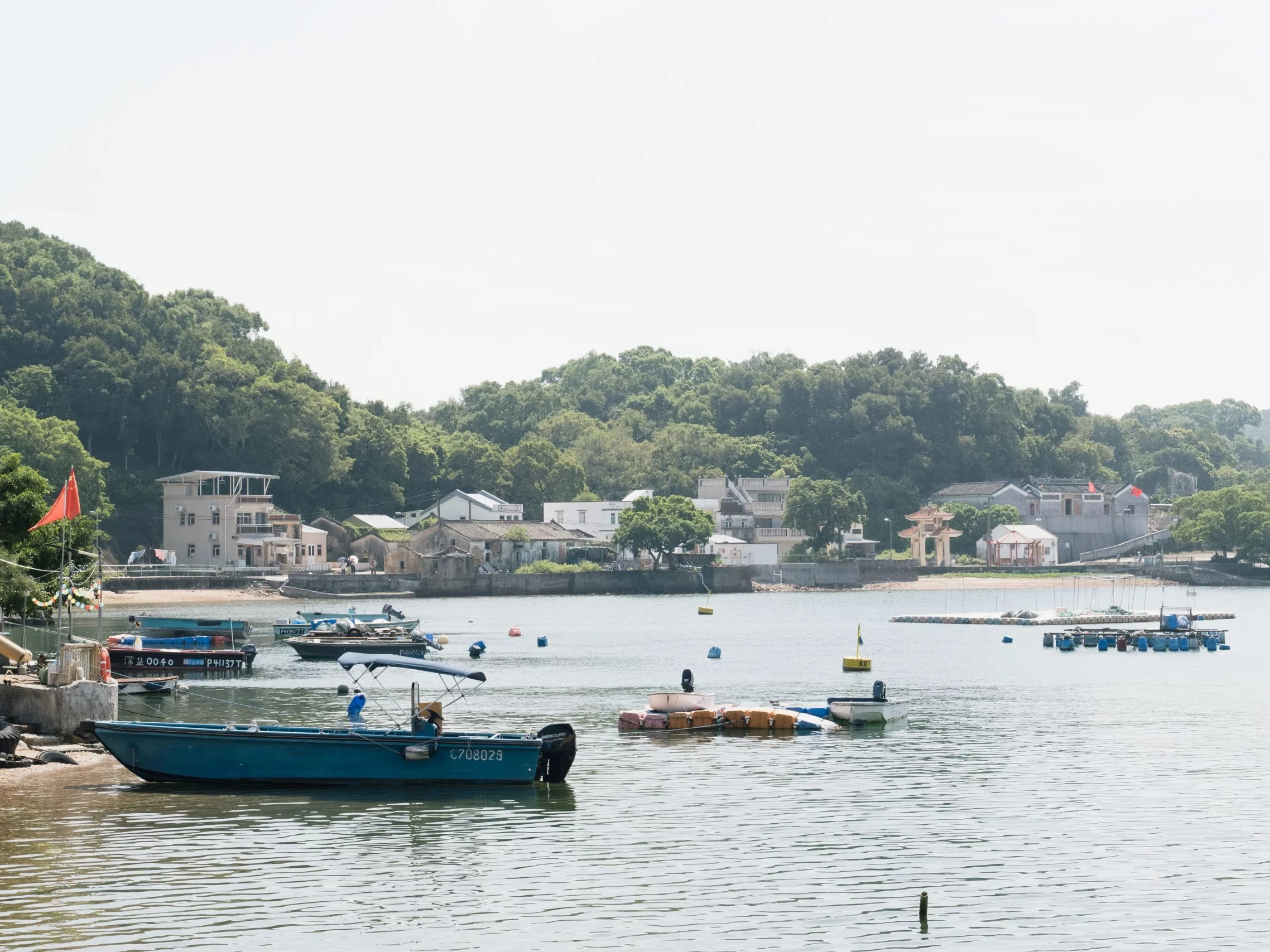
A Route Connecting Past and Present — The Challenges of Rural Public Transport
Let us first return to Ap Chau in 1958 to understand a piece of essential rural infrastructure: public transport routes connecting remote villages.
It is said that a school teacher once took a kaito (small local ferry) running between Sha Tau Kok and Kat O to get to work on Ap Chau. Since the ferry did not normally stop there, the teacher notified the boat operator before boarding. As the vessel approached Ap Chau, it slowed down. At that moment, the teacher waved from the ferry toward students waiting onshore. The students rowed a small boat out to meet the ferry, and—amid the gentle rocking of the open sea—the teacher successfully transferred from ferry to skiff and arrived in Ap Chau.
It was not until 1961 that Ap Chau finally gained a motorised kaito service operated by villagers, travelling between Ap Chau, Yung Shue Au, and Sha Tau Kok. Until then, such precarious transfers were common. Residents of So Lo Pun have similar memories: since the 1930s, a daily rowboat travelled between So Lo Pun and Sha Tau Kok. With no canopy, passengers held umbrellas when it rained. If someone urgently needed a boat, they could light a fire at the pier—villagers on Ap Chau would see the signal and dispatch a boat to pick them up.
These were not isolated cases. As history unfolded and villagers gradually migrated away from the Hing Chun Yeuk, Kat O, and Ap Chau areas, local transport patterns evolved. In Ap Chau, ferry services repeatedly changed in response to population shifts—alternating between scheduled routes, chartered arrangements, and private operations. For many years, the public could only reach Ap Chau via a weekend-and-holiday ferry from Ma Liu Shui. Villagers relied on a daily kaito service funded by the Kat O Village Office, running four round trips between Kat O and Sha Tau Kok (some extending to Ap Chau). Outside those times, they depended on fellow villagers to run boats. When considering new transport routes, many factors come into play: residents' actual travel needs, operational costs, passenger demand, and the availability of certified boat operators.
Exploring New Routes — What Does It Bring?
To improve rural transport and support revitalisation in remote areas, the project team decided to test a new route that would allow both residents and visitors to enter the villages on weekdays. Beginning in July 2022, the trial "Water Bus" service operated every Tuesday and Thursday, departing from Sam Mun Tsai and Tai Shui Hang (Landing Steps 77 in Sha Tin) and stopping at Lai Chi Wo, Kat O, and Ap Chau. Passengers could freely choose where to disembark and explore. After the project period ended, response remained overwhelming that the ferry company chose to continue operating the route at its own cost.