Home
Home






Hakka Braised Pork
Some say that the essence of Hakka cuisine lies in its salty, aromatic, and rich flavors, with pork belly dishes being a prime example. Broadly speaking, pork belly dishes can be categorized into three types.:
Kau Yuk – the meticulous classic
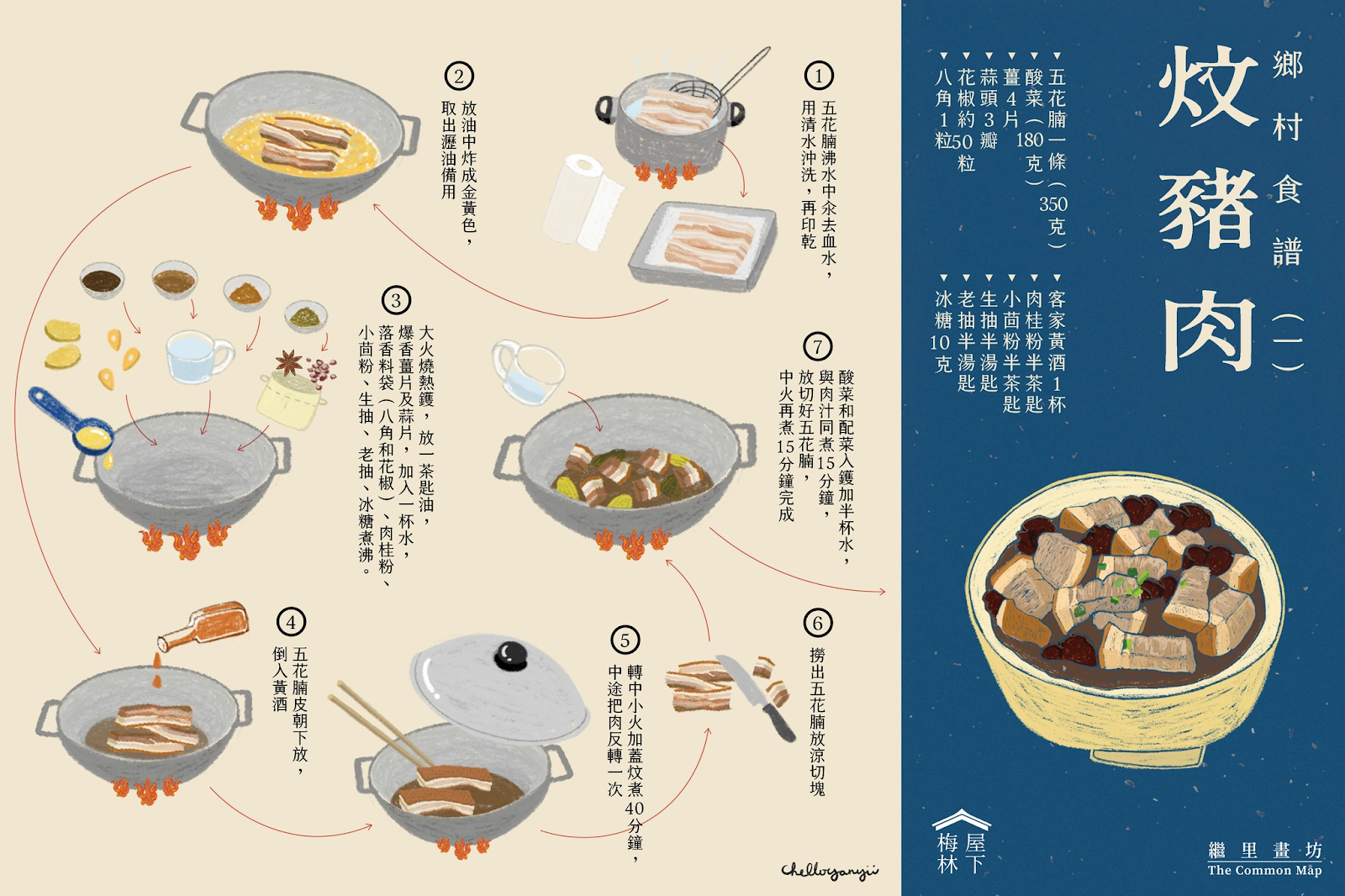
The term “kau” refers both to the act of inverting the pork on the plate—skin down during cooking, skin up when served—and to the method of first frying then braising. In this process, the pork is fried to set its shape and lock in juices, then simmered in sauce to absorb flavor. The version most widely known is Kau Yuk with pickles. Variants include taro, Chinese arrowroot, or even jicama, with the root vegetables placed between layers of pork to soak up the meat juices, reflecting the Hakka tradition of root crop cultivation. Notably, though pork belly is used, the multiple steps—blanching, frying, and even tea soaking—reduce excess fat, resulting in a dish that is rich but not greasy
Pork Pot – an ancient takeaway of Filial Devotion
In the past, marrying into another village was almost like emigrating today, with daughters perhaps returning to their natal homes only once a year. During the New Year, Hakka women would steam a pork pot to bring back to their parents’ home, both as an act of filial sharing and as a symbol of abundance—“having meat to eat means life is prosperous.” Hence, the Hakka jokingly referred to having a daughter as “raising a pork pot.” The dish was convenient to carry, with the pot topped generously with fermented black beans and ginger, both to enhance flavor and to preserve freshness during long journeys. It can be considered an early form of takeaway food.
Braised Pork – Simple and Worth Trying
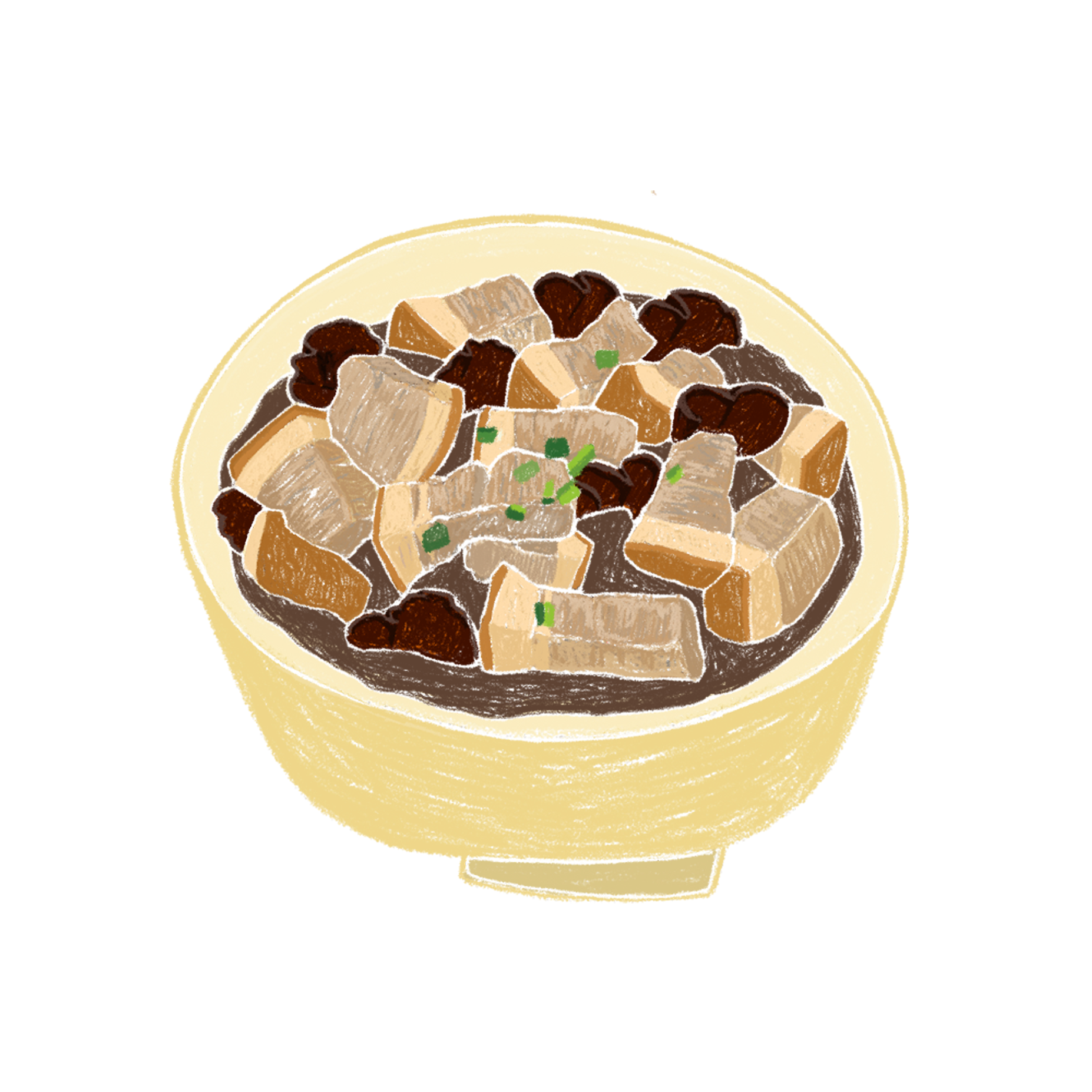
Hakka braised pork is a dish that appears at every festive occasion. Traditionally cooked over a large wood‑fired stove in a big wok, it is prepared with black fungus, fried tofu puffs, salted vegetables, and red fermented bean curd. Simple to make and close to everyday home‑style cooking, it embodies the familiar flavors of Hakka households.