 Home
Home






A Map of Deities in Sha Tau Kok (Part I)
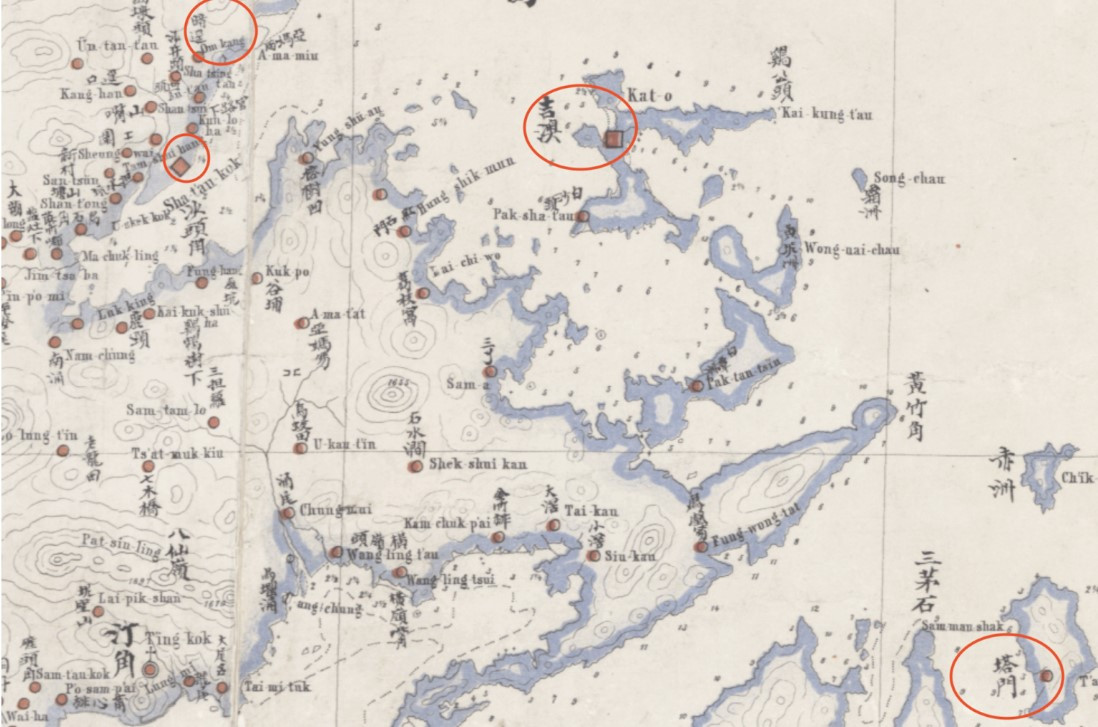
In everyday life in Hong Kong, people often encounter temples of all sizes—ranging from large Tin Hau temples spanning several shopfronts to small household shrines tucked inside shops. To understand this phenomenon, it is useful to explore the different functions temples served in rural communities.
Part 1 – Faith
Temples and deities represent different social and regional groups. In Sha Tau Kok, for example, there are currently two Tin Hau temples. One is primarily used by waterborne communities, while the other is associated with Hakka villagers. Although both temples honor the same deity, Tin Hau, they symbolize different groups within the community.
Part 2 – Defining Village Boundaries
Most temples in the Sha Tau Kok area are either Kwan Tai temples or Tin Hau temples. The Hakka migrated to Hong Kong around the Great Clearance in 1669, and they felt their social status was lower compared to the Cantonese. Building Kwan Tai and Tin Hau temples was a way to elevate their standing and voice. Compared to Kwan Tai and Tin Hau, the Earth God Pak Kung held a lower rank, yet he was the most frequently worshipped deity. Small Pak Kung temples were often found at the entrance and exit of villages, serving to mark the village boundaries.
Part 3 – Festivals
Beyond Kwan Tai’s birthday (the 24th day of the sixth lunar month) and Tin Hau’s birthday (the 23rd day of the third lunar month), the Hing Chun Yeuk, the Nam Luk Yeuk, Yim Liu Ha Tin Hau Temple and Kat O Tin Hau Temple still preserve the tradition of holding “Tai Ping Ching Chiu” festival once every ten years.
In the past, villagers often interpreted the forces of nature through the lens of feng shui and deities. It was traditionally believed that communities inevitably committed sins and became polluted in the course of living. Religious rituals such as communal purification ceremonies (Da Chiu) were therefore needed to restore purity to the human world.